Camden or Belfast?
Stay Between Them and Enjoy Both!
Make Camp DeForest your Midcoast Maine home base
Close to Camden’s mountains and schooners, Belfast’s working waterfront, and the quieter coastal pace of Lincolnville.
Camden or Belfast? It is one of the first questions travelers ask when planning a Midcoast Maine getaway. Camden delivers the classic postcard view: a harbor filled with sailboats, mountains rising behind downtown and polished shops and restaurants within an easy stroll. Belfast feels a little less expected—a lively working waterfront, independent businesses, galleries and a creative, lived-in energy.
The good news is that you do not have to choose. Camp DeForest sits between the two in Lincolnville, giving you an easy launch point for both towns and a quieter place to land when the day is done.

Why choose between Camden and Belfast?
Camden and Belfast are close enough to pair in one trip, but different enough to make the combination worthwhile. Staying between them keeps the itinerary flexible: follow the weather, save a mountain morning for a clear day, or head north when Belfast’s markets and galleries are calling.
Camden: mountains, schooners and postcard Maine
Drive ten-minutes south from Camp DeForest and Camden soon comes into view where the Camden Hills meet Penobscot Bay. Camden is compact, walkable and exceptionally picturesque. Its harbor is filled with schooners, sailing boats and working vessels, while the surrounding streets offer restaurants, galleries, boutiques and historic architecture.
A day in Camden might include:
Coffee and a walk around Camden Harbor
A windjammer or schooner sail on Penobscot Bay
Shopping along Main Street and Bay View Street
A visit to the Camden Public Library and Amphitheater
A hike or drive to the summit of Mount Battie
Swimming, paddling or picnicking at Megunticook Lake
Skiing the slopes of the Camden Snow Bowl (in winter!)
Dinner overlooking the harbor
Camden Hills State Park is one of the region’s essential stops. From the summit of Mount Battie, the islands and harbors of Penobscot Bay stretch toward the horizon. More ambitious hikers can continue into the park’s network of wooded trails and mountain overlooks.
Camden is especially rewarding early in the morning, when the harbor is quiet, and later in the afternoon, when the day-trippers begin to depart.
From Camp DeForest: approximately 10 minutes by car.
BELFAST: a working waterfront with an independent spirit
Head north from Camp and you will arrive in Belfast, a historic harbor city that feels creative, unhurried and distinctly its own. Belfast’s downtown rises gently from the waterfront, with handsome brick buildings occupied by independent restaurants, cafés, galleries, bookshops and locally owned stores. Its harbor remains very much at work, but a waterfront path makes it easy to explore on foot.
A day in Belfast might include:
Walking the Belfast Harbor Walk
Exploring Main Street and the historic downtown
Visiting the United Farmers Market of Maine
Browsing independent bookshops, galleries and antiques
Visiting the shops and studios at Waterfall Arts
Crossing the Armistice Footbridge
Taking a harbor cruise or paddling along the waterfront
Catching a film, performance or seasonal festival
Belfast is polished without feeling overly perfected. Its creative community, working harbor and strong local food culture make it an ideal counterpoint to Camden.
From Camp DeForest: approximately 15 minutes by car.
Lincolnville: the quiet center of the trip
Between Camden and Belfast sits Lincolnville, one of the loveliest—and most easily overlooked—towns on the Maine coast.
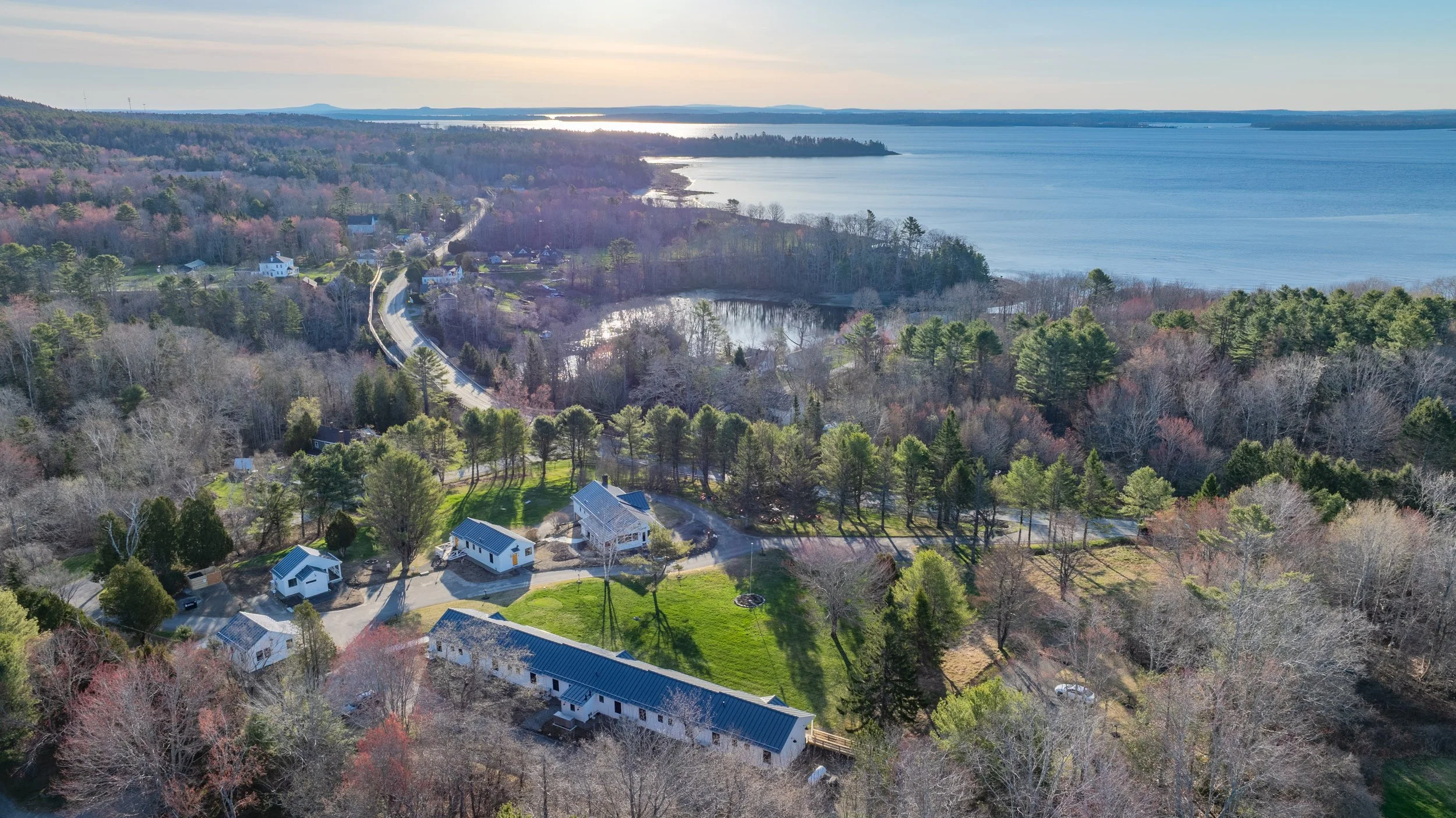
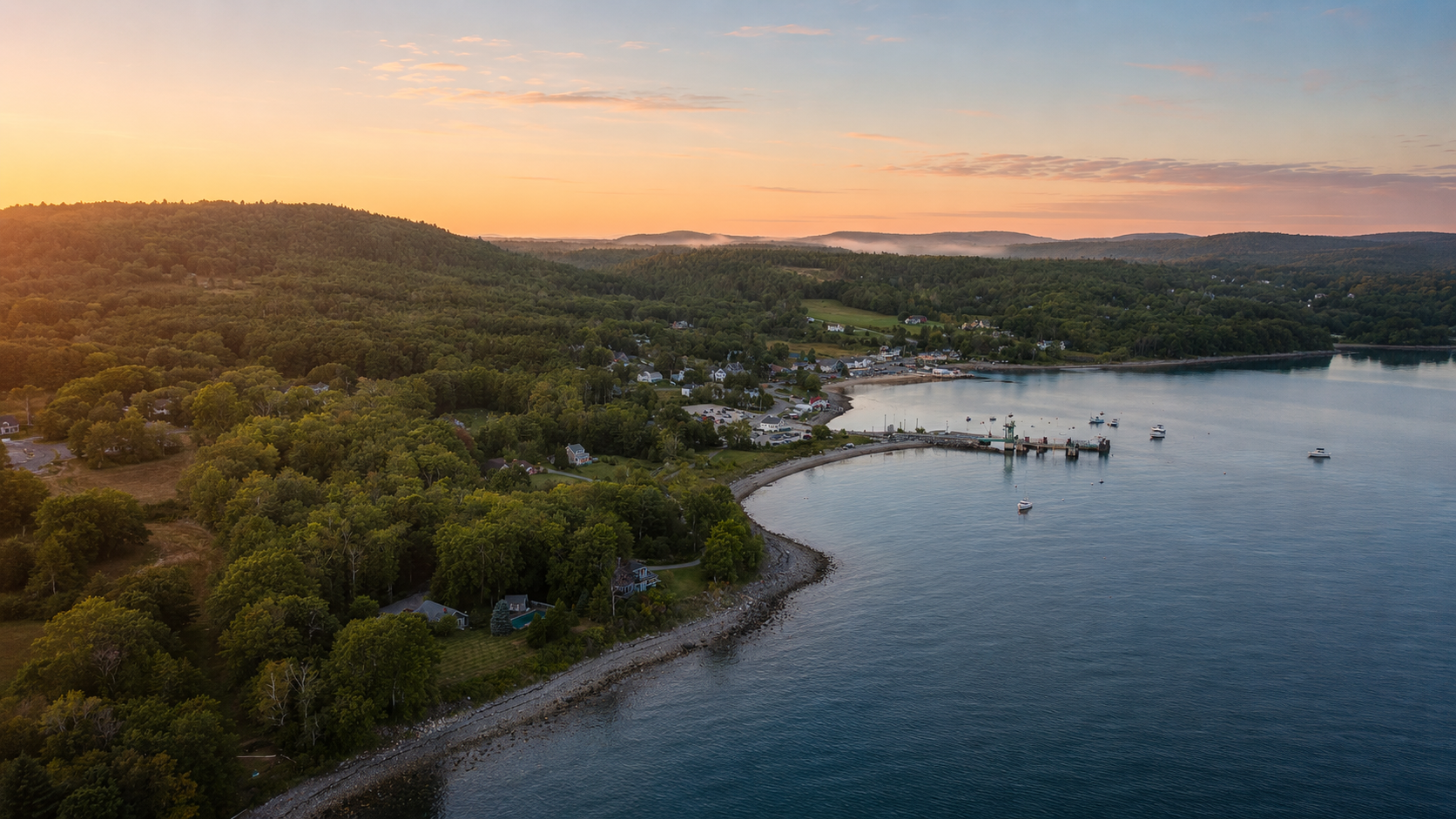
Lincolnville provides the breathing room that makes a Midcoast getaway feel like a genuine escape. Here, wooded hills descend toward Penobscot Bay, back roads wind past farms and old houses, and the coast feels close without being crowded.
From Lincolnville Beach, the Margaret Chase Smith ferry crosses to Islesboro, making an island excursion possible without an elaborate plan. Nearby trails, lakes, farm stands and swimming spots provide plenty to explore without venturing into either town.
Camp DeForest sits near the mouth of the Ducktrap River, surrounded by pines and close to the water. It is removed from the bustle of downtown while remaining conveniently located along Route 1. That means you can spend the day exploring—and then actually escape from where you have been exploring.
A better home base for Midcoast Maine
A hotel in downtown Camden is excellent if you intend to spend your entire visit in Camden. The same is true of Belfast. But most visitors want to experience more than one town.
Staying between Camden and Belfast makes it easier to explore the whole region, including: Camden Harbor, Belfast’s historic downtown, Camden Hills State Park, Mount Battie and Mount Megunticook, Lincolnville Beach, Megunticook Lake, and nearby towns like Rockport, Rockland, Northport, Searsport, and Islesboro, not to mention attractions like the Farnsworth Art Museum, the Owls Head Lighthours, andSeasonal festivals throughout the Midcoast!
Camp DeForest provides a central base without feeling like a compromise. You can decide where to go each morning according to the weather, the event calendar or simply what sounds good over breakfast.
Camp DeForest reimagines the classic 1950s Maine summer camp as a boutique hotel experience.
Guests can choose from individually designed lodge rooms and private cabins, all combining nostalgic character with contemporary comfort. Vintage books, old camp ephemera, cheerful colors and collected Maine objects create the atmosphere; comfortable beds, organic linens, air conditioning, strong Wi-Fi and heated bathroom floors make it considerably more civilized than summer camp ever was.
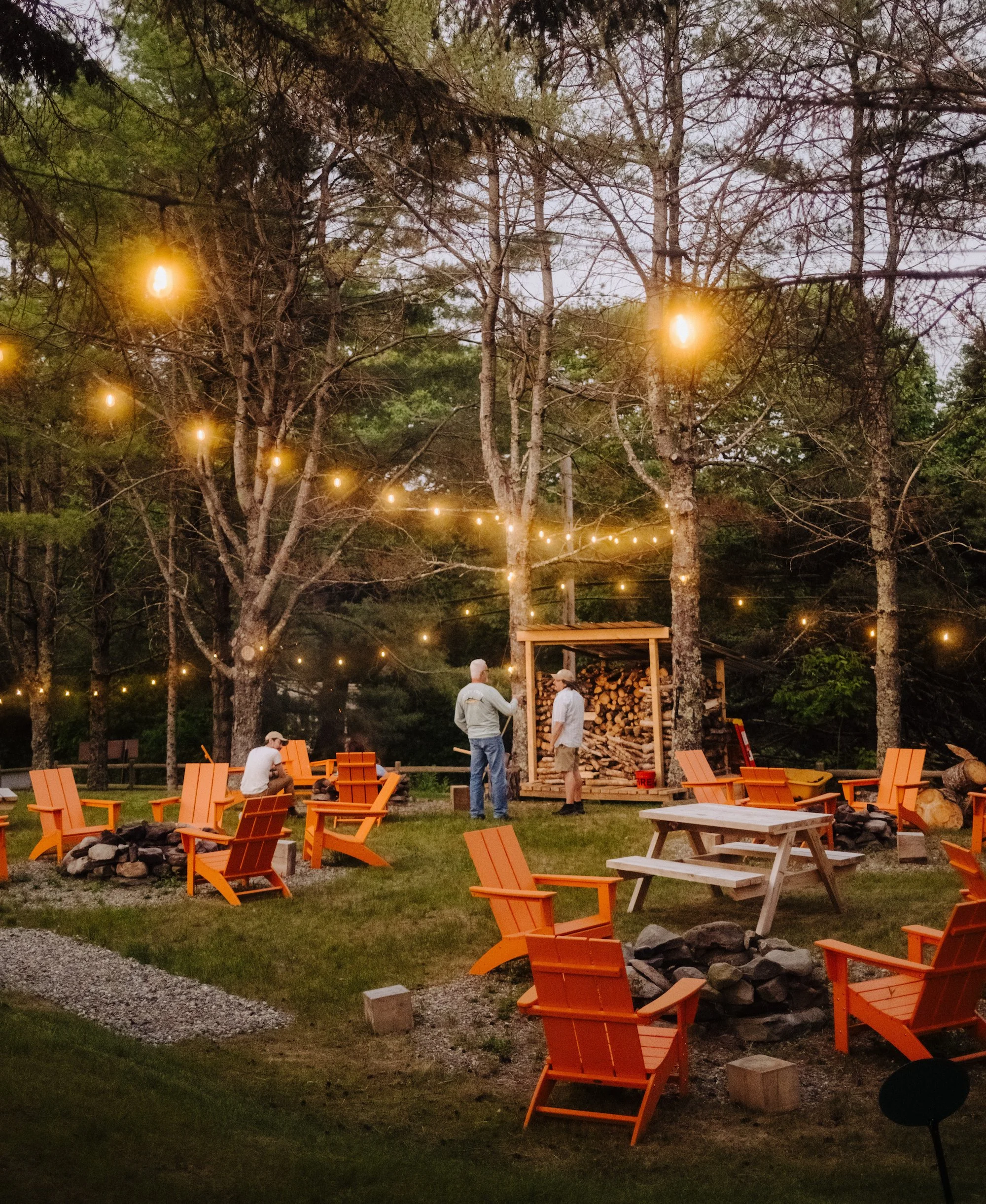
Your stay includes access to the Lodge and Camp’s shared spaces, where you can linger over breakfast, play a board game, browse the Camp Store or simply settle into a chair with nowhere urgent to be. Outside, Camp offers:
Wood-burning campfires
S’mores beneath the stars
Lawn games, frisbee golf, croquet, and cornhole
Quiet places to read or reconnect
A relaxed porch and patio
Cocktails at the Lantern Bar and Tiki Scout
A playful sense that the ordinary rules of adulthood have been temporarily suspended
Camden and Belfast provide the day’s discoveries. Camp provides the part you remember afterward.
Stay somewhere that feels like part of the triP

Camden or Belfast? The answer is yes.
Camden offers one vision of coastal Maine. Belfast offers another. Camp DeForest lets you experience both while staying somewhere with a personality entirely its own.
Wake up among the pines. Choose a direction. Follow the coast. Then come back to Camp.
Your Midcoast Maine base camp is waiting.
Common Questions
-
Camden is best known for its mountain-backed harbor, sailing and polished coastal atmosphere. Belfast offers a working waterfront, independent shops and a more lived-in creative energy. They are close enough to enjoy on the same trip.
-
Yes. The towns are close enough to explore during the same stay. Many guests spend one day in Camden, another in Belfast and use Lincolnville and Camp DeForest as their central base.
-
Lincolnville is the natural midpoint. Camp DeForest offers a characterful home base near the coast, with Camden roughly ten minutes south and Belfast roughly fifteen minutes north under normal conditions.
-
The towns are about 18 miles apart along Route 1. Drive time varies with traffic and season, but the trip commonly takes around 25 to 30 minutes.
-
Popular choices include Camden Harbor, downtown shops and restaurants, Camden Hills State Park, Mount Battie, schooner sails and scenic drives (and the Camden Snow Bowl in winter!)
-
Walk the Belfast Harbor Walk, explore Main Street, visit galleries and independent shops, check local markets or events, and enjoy the waterfront food scene.
-
Yes. Lincolnville offers a quieter coastal pace, a public beach, local businesses and the ferry to Islesboro, plus an excellent location between Camden and Belfast.
-
Summer is busiest and best for sailing and beach days. Fall combines comfortable exploring with foliage. Spring and winter are quieter and can be ideal for travelers who prefer a slower, more local experience.