

Land Stewardship
at Camp DeForest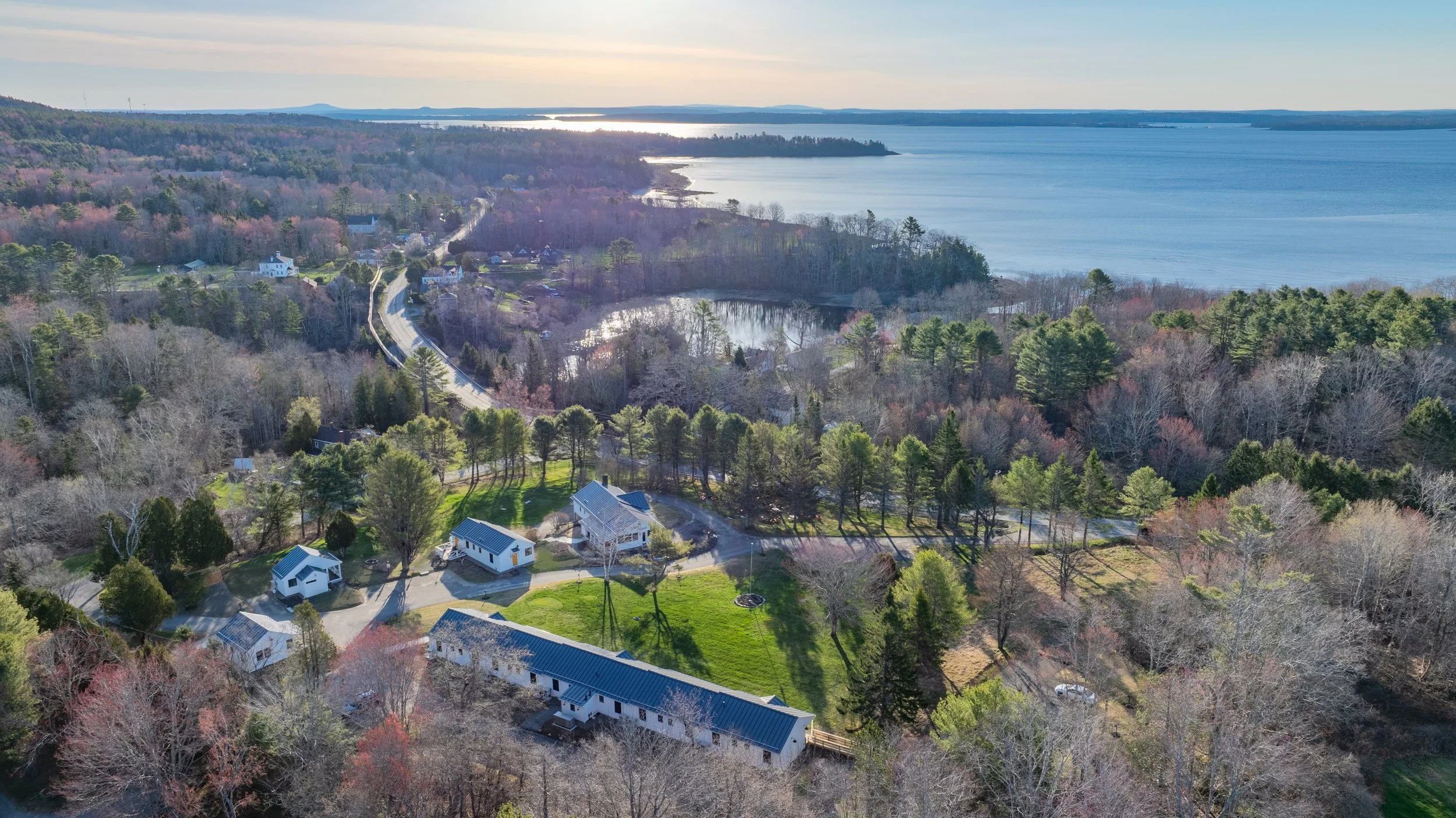
At Camp DeForest, the land is not a backdrop. It is the primary asset entrusted to our care.
Situated within Maine’s Midcoast woodland and shoreline ecosystem, Camp DeForest operates under a simple guiding principle: use the land without exhausting it; improve it without over-imposing upon it.
I. Preservation Before Expansion
Camp DeForest prioritizes adaptive reuse over new development. Existing structures are restored and rehabilitated wherever possible, minimizing disturbance to soil, tree canopy, and natural drainage patterns. New construction, when necessary, is limited in scale and footprint, and is designed to harmonize with the surrounding forest rather than dominate it.
We intentionally avoid over-densification, excessive paving, and visual sprawl. Growth is measured against ecological impact first.
II. Woodland Integrity
The property is managed to preserve native forest composition and understory. We do not clear-cut, over-lawn, or replace natural groundcover with ornamental landscaping. Where intervention is required for safety or resilience, it is undertaken selectively and responsibly.
Wooded corridors are maintained to protect habitat, soil stability, and biodiversity.
III. Low-Impact Hospitality
Camp DeForest operates as a small-scale, low-density hospitality model. By limiting guest count and avoiding high-impact infrastructure, we reduce strain on water, waste, energy, and surrounding ecosystems.
Guest programming emphasizes quiet recreation — hiking, shoreline exploration, wildlife observation, and campfire gathering — over mechanized or high-impact activities.
IV. Durable Materials & Long Lifecycle Design
Renovations and improvements prioritize durable materials, natural finishes, and timeless design. Our approach favors longevity over trend, and repair over replacement.
We view thoughtful construction as an environmental responsibility.
V. Resource Responsibility
Energy systems, heating solutions, and operational practices are evaluated for efficiency and long-term sustainability. Seasonal rhythms of use are respected, and consumption is aligned with scale.
As resources and technology evolve, Camp DeForest remains committed to integrating improvements that enhance efficiency while preserving the visual and ecological character of the property.
VI. Stewardship Across Generations
Camp DeForest is not conceived as a short-term venture. It is managed with a multi-generational horizon.
The forest canopy we preserve today, the natural buffers we protect, and the soil we refrain from disturbing are part of a long stewardship arc that extends beyond current ownership.
We measure success not only by occupancy, but by ecological continuity.
Camp DeForest affirms that hospitality and conservation need not be in opposition.
The land sustains the experience; our responsibility is to sustain the land.