
The Friendcation Blueprint: How to Plan the Perfect Group Getaway

The getaway your group chat has been promising for years.
You know those friendships that formed over late-night cabin conversations, morning swims before anyone else was up, and the unspoken agreement that this time together was sacred? The ones where saying goodbye at the end of summer felt physically wrong?
Good news: you don’t need a wedding invitation or a milestone birthday to get your people in one place again. The best friendships deserve more than rushed brunches and group texts that always end with “we really need to do this more often.” They deserve a proper friendcation. A few unhurried days where the phones go quiet, conversations go deep, and the only real agenda is showing up for each other.
We’ve hosted dozens of friend groups here at Camp DeForest, and we’ve picked up a few things about what separates a good trip from one people still talk about years later. Consider this your planning blueprint.
Start with the Right Crew (Not the Biggest Crew)
The sweet spot? Six to twelve people. Small enough that everyone actually connects with everyone. Big enough that there’s always someone up for whatever the moment calls for.
Resist the urge to invite every person you’ve ever shared a drink with. This is about curating a group that gels. Think about the friends who bring out your best version of yourself: the people you can sit in comfortable silence with and the ones who make you laugh so hard your ribs ache. Personalities that complement rather than compete. Where introverts find porch-swing quiet and extroverts find the campfire circle, both perfectly content.
Mixed crews work beautifully here. College friends meeting work friends. Old roommates connecting with new neighbors. Something about a few days among the pines has a way of helping people find their common ground fast.
Four Seasons, Four Totally Different Friendcations
Maine doesn’t do monotony. Every season delivers a completely different trip, and your friendcation flavor depends on when you show up.
Summer brings those long golden evenings stretching past 9 PM. Bayside drinks. Campfire conversations that wind through midnight without anyone checking the time. The bay is warm enough for a swim (well, Maine warm—we won’t sugarcoat it), and every meal tastes better eaten outdoors under the pines.
Fall turns the property into something you’d swear was painted. Foliage begins as soft whispers of yellow, then explodes into full October glory. All that beauty makes people present. Reflective. Grateful. The air gets crisp enough for campfires to feel less optional and more essential, and apple cider quietly becomes a food group.
Winter friendcations are for the adventurous ones. The crew who treats “cozy” as a verb and believes the best stories come from leaning into the season. Snowshoe treks through silent woods, hot toddies by the fire, and a particular intimacy that only a quiet winter at camp can deliver.
Spring carries a contagious renewal energy. Everything feels possible in May and June. The world is green and new, the days are stretching longer, and there’s this collective exhale that comes from surviving another Maine winter together. It’s the perfect season for a trip that feels like a fresh start.
Build a Loose Framework
(Then Leave Room for the Good Stuff)
The friendcations that really work have just enough structure to create shared moments without feeling like a corporate offsite. Think tentpoles, not itineraries.
Plan one or two anchor activities that bring the whole group together: a morning hike along the coast, a lobster bake where everyone pitches in, a yoga session on the lawn for whoever’s interested. These become the touchstones of the trip, the scenes people will replay for months.
Then protect the unstructured time. That’s where friendcation gold lives. The impromptu canoe race that materializes after lunch. Two friends who disappear for a walk and return three hours later having solved every problem they brought with them. The afternoon when half the group naps while the other half wages an epic bocce ball tournament on the meadow.
At Camp DeForest, we’ve watched groups settle into a natural rhythm. Mornings start slow: coffee on cabin porches, conversations in no particular hurry. Energy builds late morning when people gravitate toward the lawn or the waterfront. Afternoons are for adventures or hammocks (both equally valid). And evenings? Evenings are for gathering. That’s when the real magic shows up.
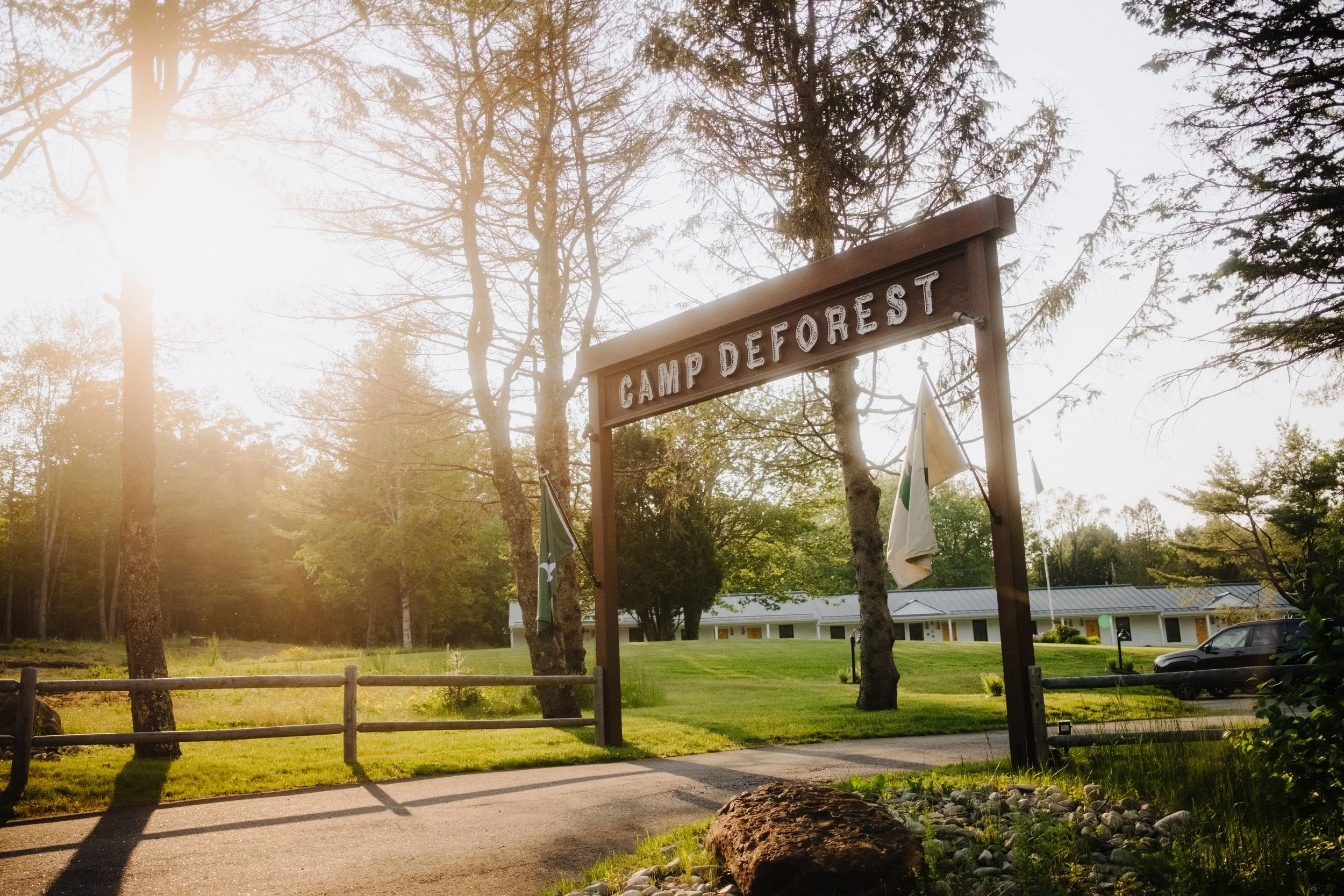
Lean Into Camp Culture (Yes, Even as Grown-Ups)
Something about being at camp gives everyone permission to be a little bit silly, a little bit nostalgic, and a whole lot more themselves. Don’t fight it. Lean in.
Organize a field day with competitions that matter just enough to be fun but not enough to ruin friendships. Build a s’mores bar with fancy additions—caramel, sea salt, dark chocolate—because you’re adults and you’ve earned it. Put together a playlist that’s half throwback anthems, half new discoveries. Bring cards, board games, or conversation prompts. Start a late-night storytelling circle where everyone shares something the group has never heard.
The beauty of a friendcation at a place like Camp DeForest is that the setting does half the heavy lifting. The vintage camp feel, the fire pits, the canoes, the lawn games scattered across the meadow—it all invites a particular kind of playfulness that’s harder to access in everyday life. The property is designed for connection, not just accommodation.
Master the Art of the Shared Meal
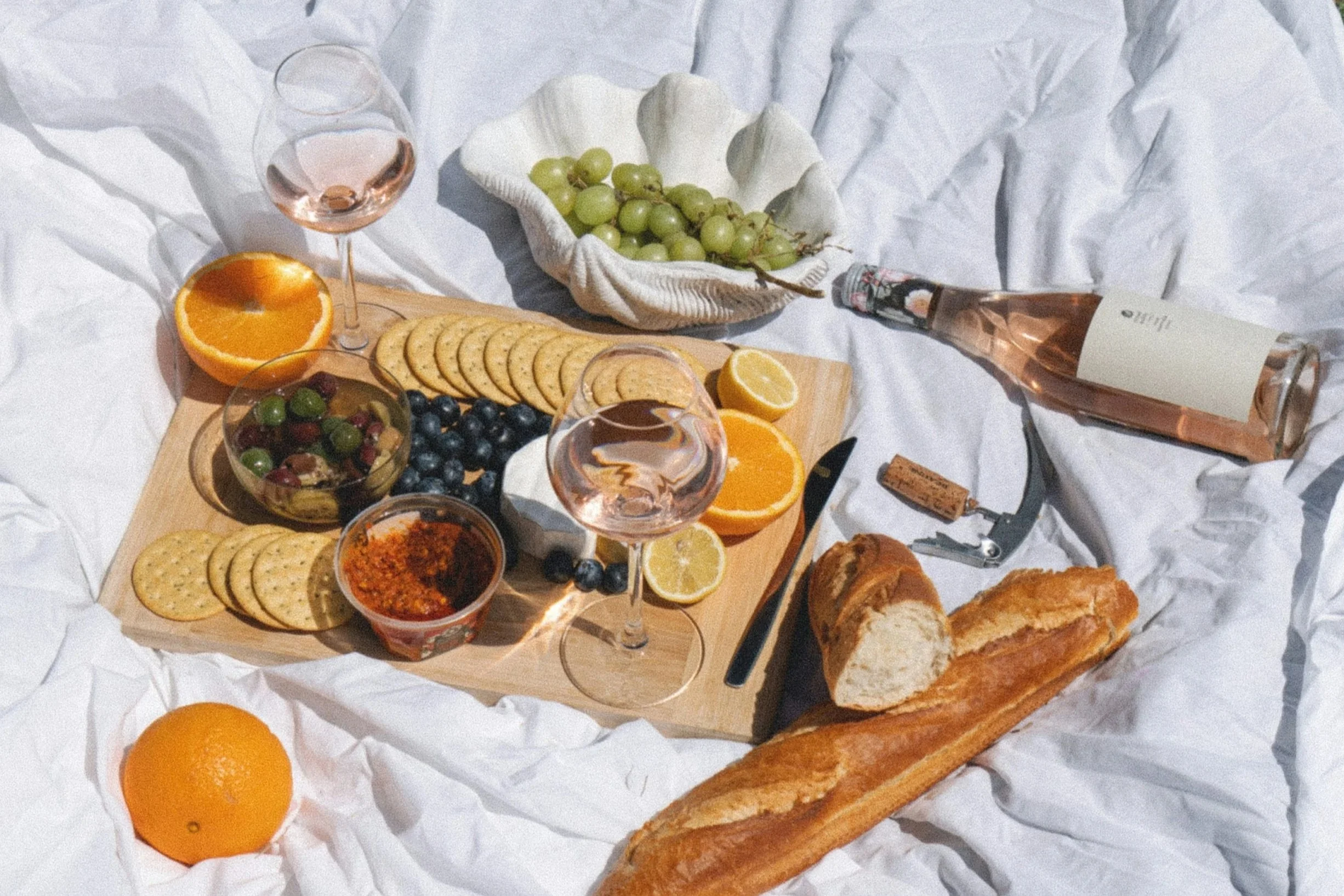
Few things bond a group faster than cooking and eating together. Plan at least a couple of communal meals where the whole crew gets involved: one person preps vegetables, another works the grill, someone else sets the table under the pines. The food itself almost doesn’t matter. It’s the collective effort that creates the memory.
But also: give yourselves permission to keep it simple. Order pizza one night. Hit up the local fish shack for takeout lobster rolls. Keep breakfast low-key so mornings stay relaxed. The point isn’t to prove you can run a kitchen brigade. It’s to spend more time together.
Our full lodge kitchen can handle whatever your group dreams up, from elaborate dinner parties to no-fuss pasta nights. And if you’d rather outsource the food entirely? We can connect you with local caterers who understand that feeding a group of friends should feel like gathering around a family table, not picking up a tray at a conference center.
Honor Different Energy Levels (It Makes Everything Better)
Not everyone wants to do everything all the time, and that’s not a problem to solve. The best friendcations honor the reality that people recharge in completely different ways.
Some of your crew will want to explore every trail and activity within driving distance. Others need quiet time with a book on a cabin porch or a solo paddle at dawn. Some thrive in deep one-on-one conversations. Others light up in big group energy. Create a culture where opting out of an activity carries zero guilt. “I’m going to sit this one out” should be met with “sounds good, catch you later” and nothing else.
At Camp DeForest, the layout naturally supports this. Cabin porches, quiet corners of the meadow, the beach at first light—there’s no shortage of places to be alone without feeling isolated. And the communal spaces (the fire pit, the lodge, the lawn) are where groups naturally reconvene when they’re ready. Together without being on top of each other. Alone without being left out.
Get the Logistics Out of the Way Early
Nothing drains the energy from a friendcation faster than murky expectations around money. Have that conversation upfront. Directly. Decide whether you’re splitting everything evenly or tracking individual expenses. Set up a shared fund for groceries and group activities, or appoint one person as the unofficial “camp banker” who handles the math and gets reimbursed later.
For lodging, we recommend the organizer reserve the cabin block and then collect from friends individually, or everyone books their own room through a group code. Either approach works. Just decide early and communicate clearly.
Same goes for transportation. Who’s driving? Who needs a ride? Where are you meeting up? Will you carpool to activities or does everyone want their own wheels? These details feel mundane right up until they’re creating tension on day one. Handle them in advance so you can focus on actually being there.
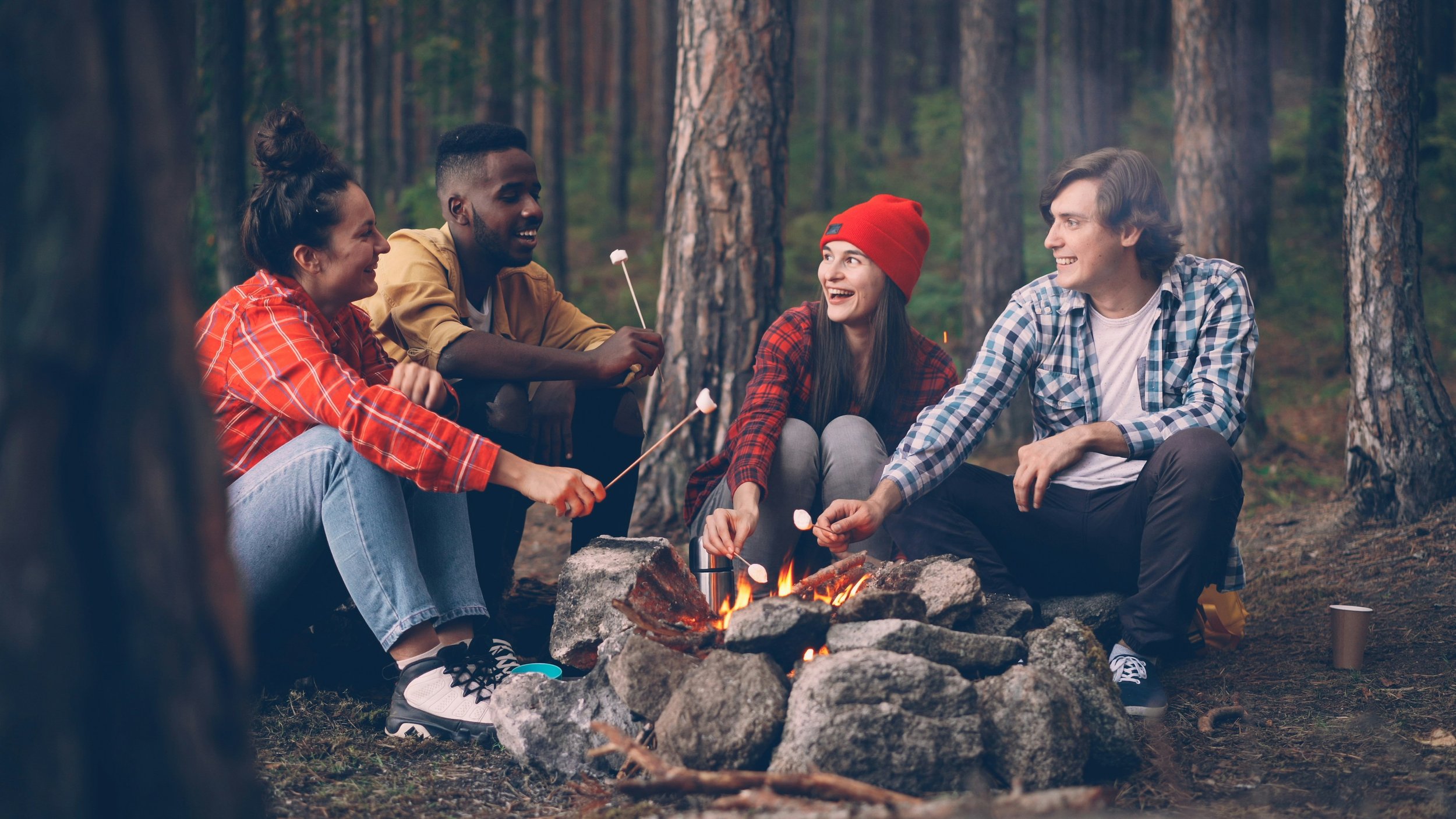
Start Traditions That Bring You Back
The truly magical thing about a great first friendcation? It rarely stays a one-time thing. Some of our favorite repeat groups have been returning to Camp DeForest with their crew for years, and they’ve developed traditions that make each trip richer.
One group runs an annual “summer camp for grown-ups” weekend every August, complete with color wars and a talent show. Another crew arrives every fall and spends Saturday morning volunteering at a local food bank before returning to camp for a big communal dinner. A set of college friends reunites each May for what they call “Spring Training”—a reset weekend before summer chaos takes over.
Start small. Maybe it’s everyone sharing one thing they’re grateful for before the first dinner. A group photo in the same spot each year. A camp journal that travels with the crew, where everyone adds one entry per trip. These tiny rituals become the thread connecting friendcations across the years, giving each one a sense of continuity that deepens the whole tradition.
The Real Secret to a Great Friendcation
Here’s what we’ve learned from hosting friend groups of every size, age, and origin story: the specific activities matter far less than the fact that you’re all there. Together. Without the usual noise of daily life pulling everyone in twelve directions.
You don’t need a perfect itinerary, an Instagram strategy, or a reason beyond “we want to be together.” You just need space—physical and temporal—where your friendships can breathe, deepen, and become more fully themselves.
Camp DeForest provides the canvas: pine meadows for lawn games, campfires built for conversations that run past midnight, cabins designed for both togetherness and solitude, and the kind of MidCoast Maine beauty that makes you put your phone down and pay attention. The real magic? That’s what you bring with you. The inside jokes, the knowing looks, the shared history, and the friendships that deserve far more than group texts and postponed plans.
Life moves fast. Jobs get busier, families expand, geography scatters people. The friends who truly know you become more precious with every passing year. A friendcation isn’t a luxury. It’s maintenance for the relationships that matter most. It’s choosing the people who make you feel most yourself.
So gather your crew. Pick your dates. And let the planning be easy so the experience can be rich. Because somewhere between the laughter on the lawn and the late conversations by the fire, between the shared meals and the quiet mornings on cabin porches, you’ll remember exactly why these friendships matter. And you’ll be planning next year’s trip before this one ends.
They always do.
Ready to plan your friendcation at Camp DeForest?
We’re here to help with everything from choosing the right cabins for your crew to connecting you with local vendors for meals and activities. Reach out and let’s start planning: hello@campdeforest.com