
Sustainability at Camp: How We Take Care of the Woods That Take Care of You
Meet the Conservation Corps
Camp DeForest's commitment to protecting MidCoast Maine, one composted plate and planted tree at a time.
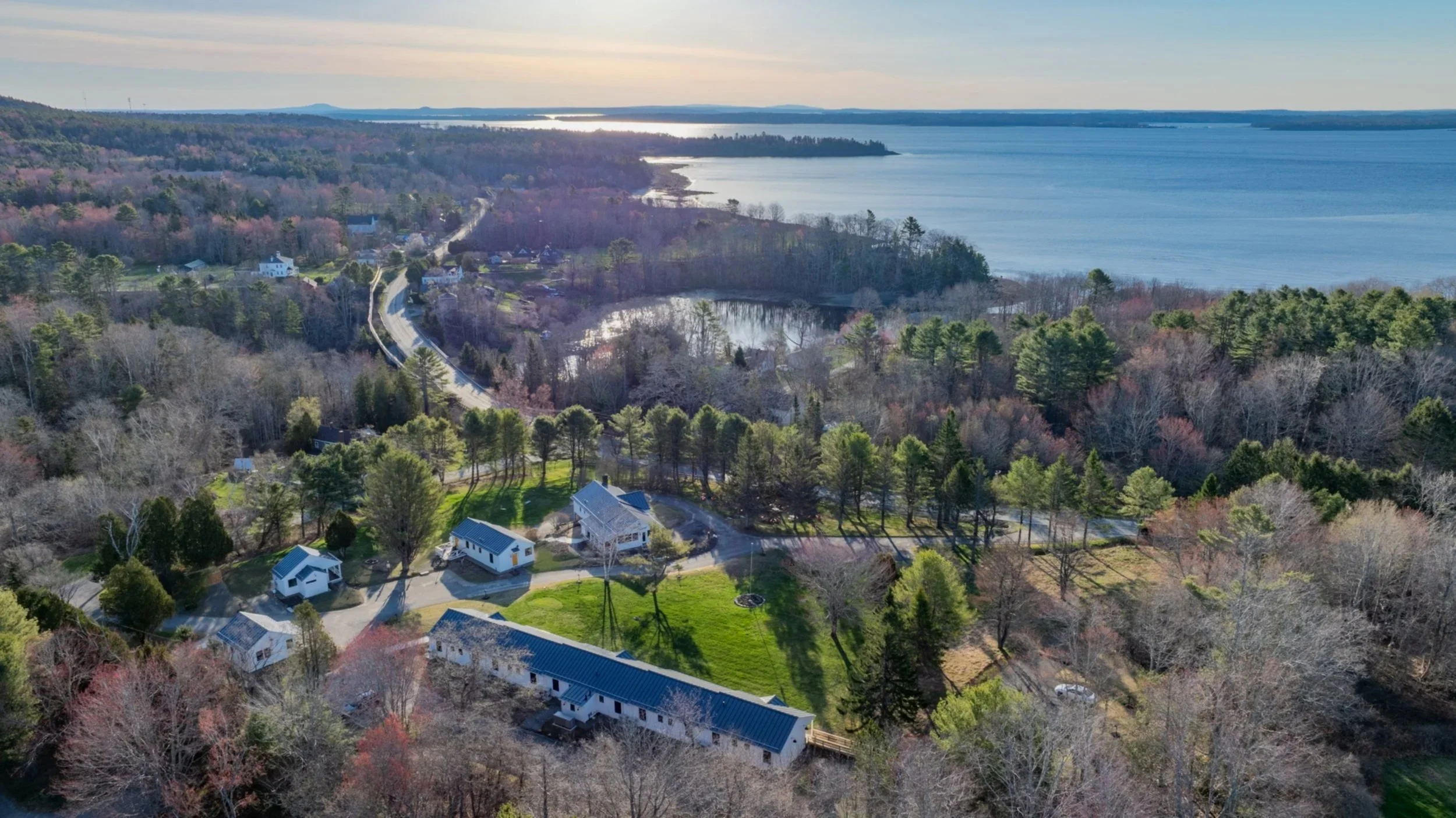
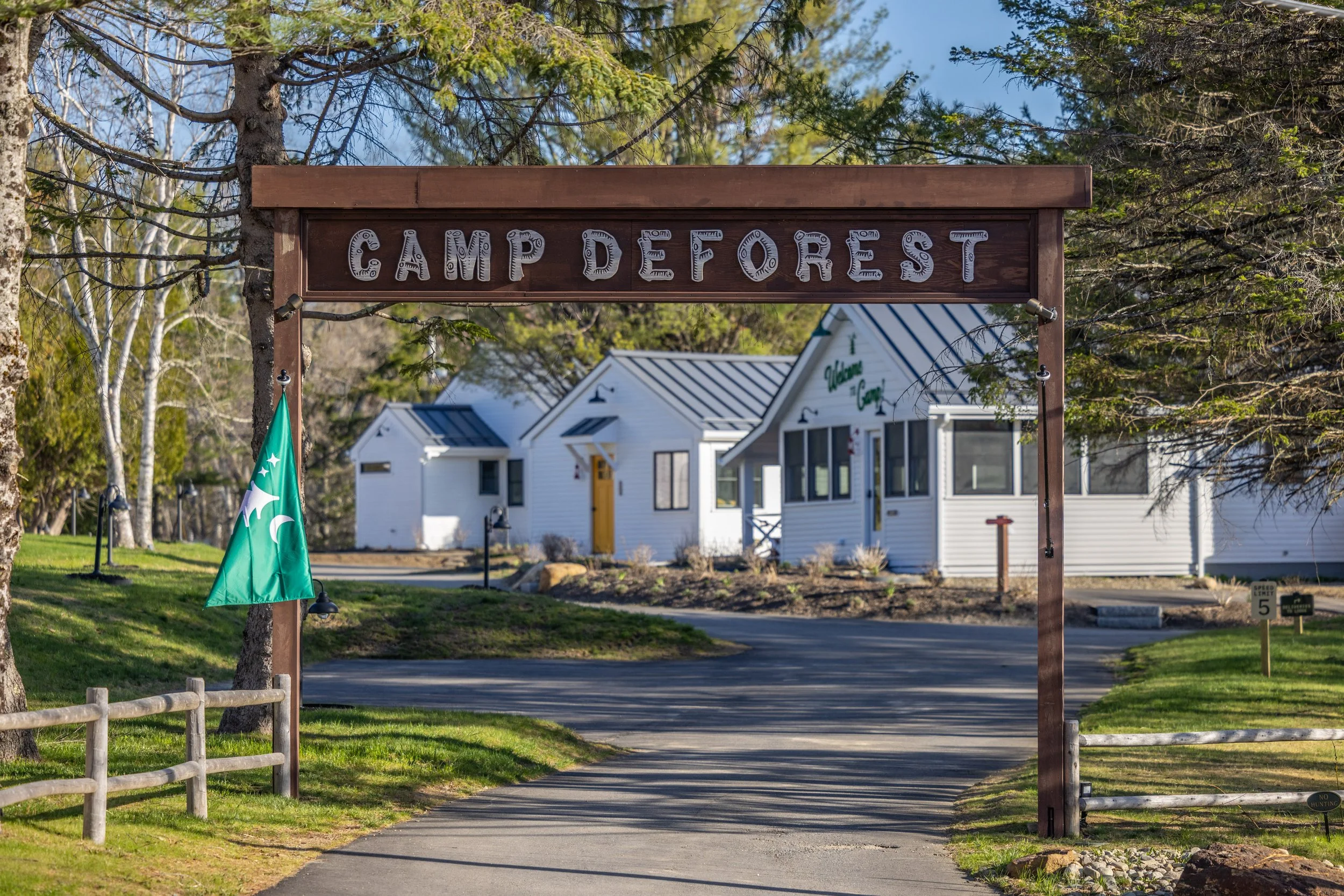
Here’s a confession: Camp DeForest was never supposed to be a “green” hotel. We didn’t start with a sustainability manifesto pinned to the lodge wall. We started with a forgotten little motor lodge on the Lincolnville coast—the old Ducktrap Motel—and a stubborn belief that the best things in life deserve a second act.
So we recycled her. Rebuilt the bones, restored the character, filled the cabins with vintage treasures that had stories of their own. And somewhere along the way, we realized that recycling one building was just the beginning. If we were going to run a camp in the Maine woods, we had a responsibility to take care of the woods, too.
That’s how the Camp DeForest Conservation Corps was born—and why we recently published our formal Land Stewardship commitment. Not because some consultant told us to. Because the pines outside your cabin window are counting on us. (And honestly, the loons would never forgive us if we didn’t.)
Join the Conservation Corps (No Uniform Required)
The Conservation Corps isn’t a program you sign up for. It’s something you’re already part of the moment you check in. Every camper who stays with us plays a role in keeping our little corner of Maine healthy—and most of it happens without you even thinking about it.
We let Mother Nature do the watering. Our lawns drink what the sky provides, and we replace bedding and towels only when you ask. Inside the Lodge, you’ll find our triple-filtered water bottle refill station—because the best water in Maine comes straight from the ground beneath your feet, not from a plastic bottle shipped from somewhere else. Bring your reusable bottle. We’ll keep it full.
Single-use plastics? Not at our camp. You’ll eat off compostable plates with compostable cutlery, and you won’t miss the alternative for a second. We’ve also swapped harsh chemical cleaners for biodegradable products—because nothing should smell like a chemistry lab when you’re supposed to be smelling pine needles and campfire smoke.
We keep it local. Our partners are Maine makers and suppliers, which means your camp experience supports the community around it—and the stuff you enjoy didn’t burn a thousand miles of diesel to get here. The Camp Store is full of recycled treasures and locally sourced goods that you can actually feel good about bringing home.
The best adventures leave no trace. We encourage low-impact recreation: hiking through the MidCoast woods, kayaking on Penobscot Bay, wildlife watching at dawn, snowshoeing in winter’s quiet. These are the activities that fill you up without depleting anything around you. (And honestly, a morning paddle beats a jet ski every single time.)
We run a camp recycling program, maintain a native pollinators garden on the grounds, and to help offset our carbon footprint, we plant trees through a partnership with Ecologi Forest. Oh—and if you drive an EV? We’ve got charging stations waiting for you. Pull in, plug in, unplug from everything else.
The Bigger Promise: Land Stewardship
The Conservation Corps covers the day-to-day—the choices we make and the ones we invite you to join. But behind all of it is a deeper commitment we’ve put in writing on our new Land Stewardship page.
The guiding principle is simple: use the land without exhausting it; improve it without over-imposing upon it.
That means we prioritize adaptive reuse over new construction. We restore and rehabilitate existing structures rather than breaking new ground. We don’t clear-cut, we don’t over-pave, and we don’t replace native groundcover with anything that needs a landscaping crew and a leaf blower. The wooded corridors on our property are maintained to protect habitat, soil stability, and the kind of biodiversity that makes Maine’s coast so extraordinary in the first place.
Our hospitality model is small-scale and low-density by design. Fourteen units. That’s it. By keeping our guest count intentional, we reduce the strain on water, waste, energy, and the surrounding ecosystem. The programming we offer—hiking, shoreline exploration, wildlife observation, campfire gatherings—is quiet recreation, the kind that gives back as much as it takes.
When we do renovate, we choose durable materials, natural finishes, and timeless design. We favor longevity over trend, and repair over replacement. We think of thoughtful construction as an environmental responsibility—not just an aesthetic choice.
Playing the Long Game
Here’s the thing about stewardship: it doesn’t have a finish line. Camp DeForest isn’t managed for this season or next year. It’s managed with a multi-generational horizon. The forest canopy we preserve today, the natural buffers we protect, the soil we refrain from disturbing—these are part of a stewardship arc that extends well beyond us.
We measure success not only by occupancy, but by ecological continuity. Because hospitality and conservation don’t have to be at odds. The land sustains the experience. Our job is to sustain the land.
Your Role at Camp
Every camper who fills a reusable water bottle at the Lodge, who skips the extra towel change, who spends an afternoon kayaking instead of idling—you’re part of the Conservation Corps. You’re part of the reason this place stays the way it is.
We’re not perfect. We’re not trying to win an award. We’re just a little camp in the Maine woods that believes taking care of this place is the price of admission for getting to share it with you.
Read our full Land Stewardship commitment here. And next time you visit, take a walk through the pollinators garden. The bees are doing their part, too.