
The Ultimate New England Road Trip Guide
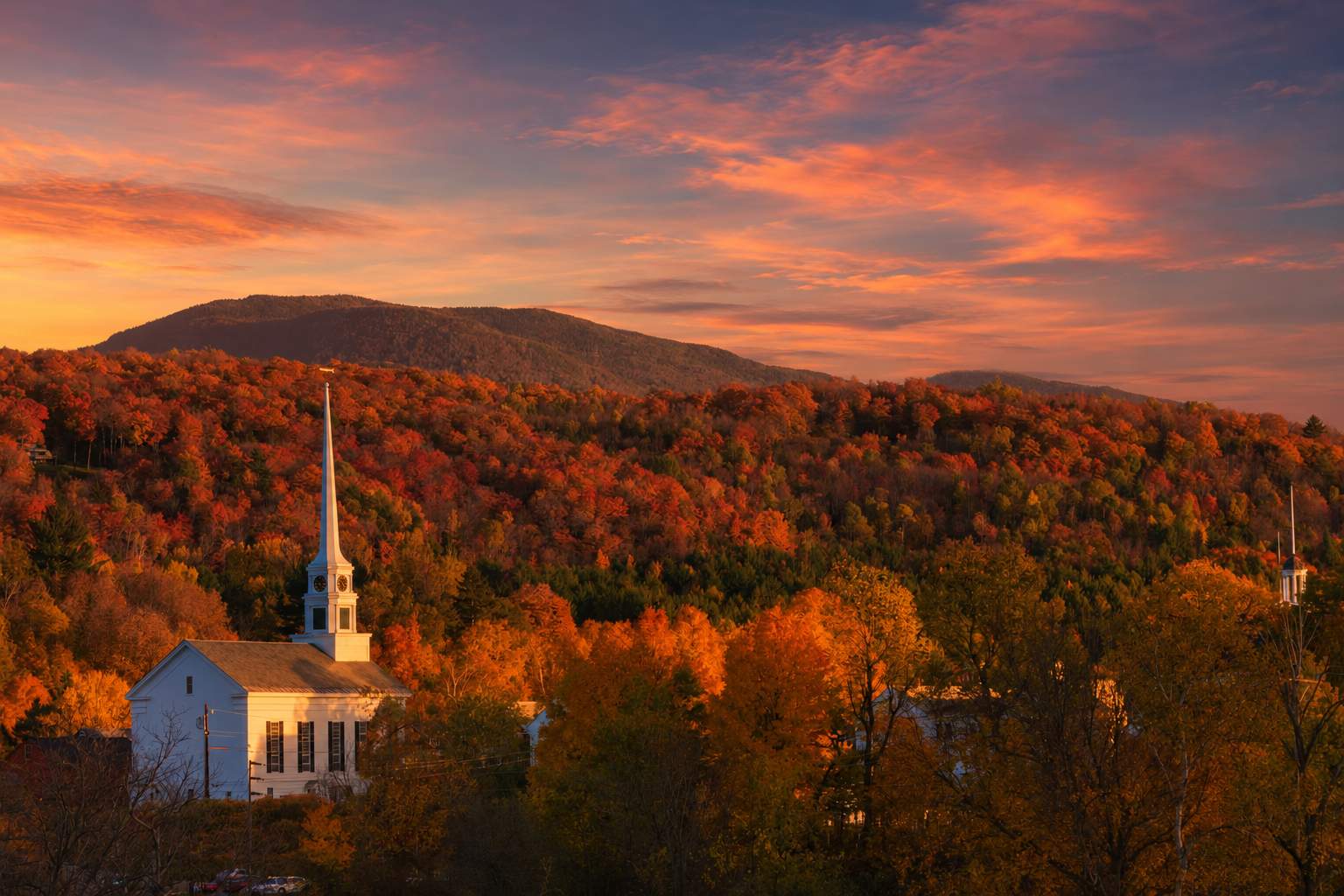
There's a particular kind of clarity that comes from driving Route 1 on a New England road trip, with salt air coming through the windows and no tight agenda on the calendar. The light changes the way it does nowhere else when you roll through the White Mountains at dusk, and the feeling of pulling into a small coastal town after a few hours behind the wheel is genuinely hard to replicate. This is what a driving tour through New England actually delivers, and it's worth doing right.
This guide gives you three itinerary lengths, a day-by-day structure with realistic drive times, and specific seasonal guidance so you can stop planning in circles and start moving. One note before you dive in: some of the most memorable stops along the Maine coast aren't the famous ones. The 50-mile stretch between Brunswick and Belfast is proof of that, and we'll get to it.
How long should your New England road trip actually be?
The answer depends on whether you want the highlight reel or the full story. All three formats below have a clear purpose and a logical structure; the right one depends on how many days you can commit and how fast you want to move.
The 5-day classic loop: coast, mountains, and back
This is the tightest version of a New England driving itinerary, and it works best for first-timers flying in and out of Boston. The route runs Boston to the White Mountains (about 2 hours to Conway or Lincoln, NH), then up through coastal Maine to Acadia, with Bar Harbor as the anchor. Day 3 is the longest leg at roughly 4 to 4.5 hours. You move fast, but you hit the marquee destinations: Franconia Notch, Flume Gorge, Cadillac Mountain, and the Bar Harbor waterfront. The trade-off is real: you're on a highlight reel, not a deep dive.
The 7-day six-state sweep
This is the format most road trippers end up recommending to others once they've done it. The route covers all six New England states: Boston, Cape Cod, Newport, Portland, Acadia, the White Mountains, and Vermont (Stowe or Woodstock). Daily drive times range from about 1.5 hours on the lighter days to 4 hours on the Bar Harbor-to-White Mountains stretch. The 7-day format is well-rounded, and it builds in enough time at each anchor to actually feel something rather than just photograph it.
The 14-day deep explorer: when you want the whole story
The 14-day route is for travelers who want to slow down and stay two nights at places that deserve it. This format adds the Connecticut coast, Burlington, and longer stays in both Acadia and Vermont. The full loop covers roughly 685 to 700 miles of driving and changes the quality of the experience entirely when you're not repacking every single morning. If you have the time, this is the version that sticks with you.
The stops worth building your entire New England road trip route around
Not every New England town earns a dedicated overnight. Some reward patience; others work perfectly as a two-hour lunch stop and nothing more. Here's how to tell the difference.
Coastal anchors that justify two-night stays
Bar Harbor is the clearest case for a 2 to 3 night stay: Acadia National Park alone needs at least two days to do it justice, with Park Loop Road, Cadillac Mountain at sunrise, and Jordan Pond in the morning fog all competing for your time. Newport gets one full day, which is enough for the Cliff Walk and at least one of the Gilded Age mansions. Portland earns an overnight for the Old Port and Portland Head Light, but pushing for two nights there often means you're sacrificing time better spent further up the coast. Kennebunkport and Rockport are excellent half-day stops; don't force them into overnight anchor roles.
Inland detours worth the added miles
Stowe and Woodstock in Vermont are the two inland towns that most consistently reward the travelers who add them in. Stowe gets one to two days; Woodstock is a full day of covered bridges and village green. The Kancamagus Highway (NH Route 112) and Vermont Route 100 are the two scenic drives that belong on any New England road trip itinerary regardless of length, the Kancamagus for the mountain drama, Route 100 for the pastoral rhythm. If time is short, skip Salem and spend that day on the Kancamagus instead.
Maine's Midcoast: the stretch most road trippers blow past
Most driving guides skip straight from Portland to Acadia without stopping. That's a mistake, and the 50-mile stretch of Route 1 between Brunswick and Belfast is where you feel it. This isn't Bar Harbor's tourist infrastructure or Portland's restaurant scene. It's working harbors, open bay views, and towns that move at their own speed. That's exactly why it rewards the travelers willing to slow down.
What makes this stretch different from the rest of the Maine coast
The Midcoast has a specific character that separates it from anywhere else on the New England coast road trip circuit. Camden sits at the base of the Camden Hills with schooners moored in the harbor and a Main Street that actually belongs to the town rather than to souvenir shops. Lincolnville is five to ten minutes north, sitting right on Penobscot Bay with views out to Islesboro and a quiet beach that draws a fraction of the crowds Bar Harbor handles on a busy Saturday. Belfast is another short drive up Route 1: old brick storefronts, good food, and a waterfront that feels lived-in rather than staged. Each of these towns is roughly 5 to 10 minutes apart, which means you can move through all of them in a single afternoon or stretch one into a full day without trying.
Why Camp DeForest is the overnight stay that makes the whole trip more interesting
Right in the middle of this stretch, in Lincolnville, sits Camp DeForest: a fully renovated boutique hotel built entirely around the nostalgia of a sleepaway camp. The cabin-chic rooms have walk-in rainfall showers, organic linens, and blackout curtains, they look like someone took every good memory of summer camp and translated it into a room you'd actually want to sleep in as an adult. The Lantern Bar serves craft beer in a cozy, lantern-lit setting that turns a post-hike beer into a proper occasion. The Camp Café handles mornings with fresh coffee and seasonal pastries. The Happy Trails gourmet hot dog counter takes care of lunch in exactly the right spirit for a road trip day.
Camp DeForest sits directly between Camden and Belfast, which means guests wake up with two of Midcoast Maine's best towns at their doorstep. Adding this stop to the Portland-to-Acadia leg adds only 20 to 30 minutes to your drive time but completely changes the character of that day. On a driving trip, this is the kind of overnight that becomes the story you tell when you get home. For travelers who road trip frequently, the Select Rewards loyalty program is worth noting: it carries benefits across a network of craft lodging properties, so the value compounds if you travel this way regularly.
New England road trip timing: peak foliage, summer peaks, and the shoulder season case
Seasonal timing changes everything about a New England driving trip: the scenery, the crowds, the cost, and the logistics. Here's what the calendar actually looks like.
Peak fall foliage: timing by state and elevation
Foliage moves from north to south and from high elevation to coast. Northern Maine and the White Mountains hit peak color in late September to early October. Vermont's Stowe and Woodstock peak in early to mid-October. The Massachusetts Berkshires follow around October 12 to 15. Connecticut and Rhode Island's coast lingers until late October. The first 10 days of October give you the highest probability of catching peak color somewhere across the full route. The Kancamagus Highway and Vermont Route 100 are the two most reliable New England fall foliage drives on the entire circuit. For the Midcoast Maine section specifically, Camden Hills peaks between October 8 and 22, with mid-October weekdays offering the best balance of color and manageable crowds. Check your state foliage trackers weekly as the trip approaches. The peak window is narrow.
Summer logistics and the case for going in May
A summer New England road trip is genuinely great, but it comes with real constraints. Bar Harbor, Stowe, and White Mountain lodging fills up 3 to 6 months out. Boston traffic can add 30 to 60 minutes to your departure window on a summer Friday. Ferry schedules to Martha's Vineyard and the islands run on summer-only timetables, typically June through early September. If you miss the booking window, you either pay significantly more or accept whatever's left. May and early June offer the same scenery with lighter crowds, lower rates, and none of the August gridlock on Route 1. Check state DOT alerts for spring mountain road reopenings if you're planning a May trip into the higher elevations.
Drive times, booking windows, and what to sort out first
Inspiration fades fast when the logistics aren't in order. Here are the specifics you need to move from planning to confirmed.
New England road trip itinerary: key drive segments and honest time estimates
Boston to Portsmouth runs 55 to 60 miles without traffic, taking about an hour to 1.5 hours, budget up to 3 hours on a summer Friday. Portsmouth to Portland is just over an hour. Portland to Acadia's entrance is 2.5 hours in normal conditions, closer to 3 to 3.5 hours in peak summer. Bar Harbor to the White Mountains via North Conway is approximately 3 hours, longer in season. The leg from Bar Harbor back toward Vermont is the longest single stretch on the 7-day loop; plan it as an early departure. Routing through Camden and Lincolnville on your Portland-to-Acadia day adds roughly 20 to 30 minutes and improves the character of that entire drive in ways the mileage math doesn't quite capture.
How far in advance to book and what runs out first
Summer lodging in Bar Harbor, Stowe, and the White Mountains needs to be secured 6 to 12 months ahead. Fall foliage lodging in rural Vermont and New Hampshire fills 6 to 9 months out. Mid-week stays (Tuesday through Thursday) offer meaningfully better availability and lower rates across the board. Secure lodging before mapping your daily route, not after. For unique properties like Camp DeForest, where the inventory is limited and the experience is specific, booking early isn't just practical advice, it's the difference between having that overnight or settling for whatever's left down the road. If Martha's Vineyard or any island stop is part of your plan, confirm ferry schedules before you finalize dates; summer timetables run June through early September and fill quickly on weekends.
The road is waiting
A New England road trip is defined by the decisions made along the way. The traveler who stops in Midcoast Maine, pulls into Camp DeForest, orders a craft beer at the Lantern Bar, and wakes up between Camden and Belfast has a different trip than the one who drives straight from Portland to Bar Harbor without looking left. Both people covered the miles. Only one has the story.
Pick your itinerary length, build your New England multi-day route around the anchor towns that deserve it, and book the stops that will actually matter. Acadia, the Kancamagus, Jordan Pond in the morning fog, a porch-side evening in Lincolnville, New England doesn't run out of good material. You just have to slow down long enough to let it find you.