
Glamping in Maine vs Camp-Themed Hotels: Which Wins?
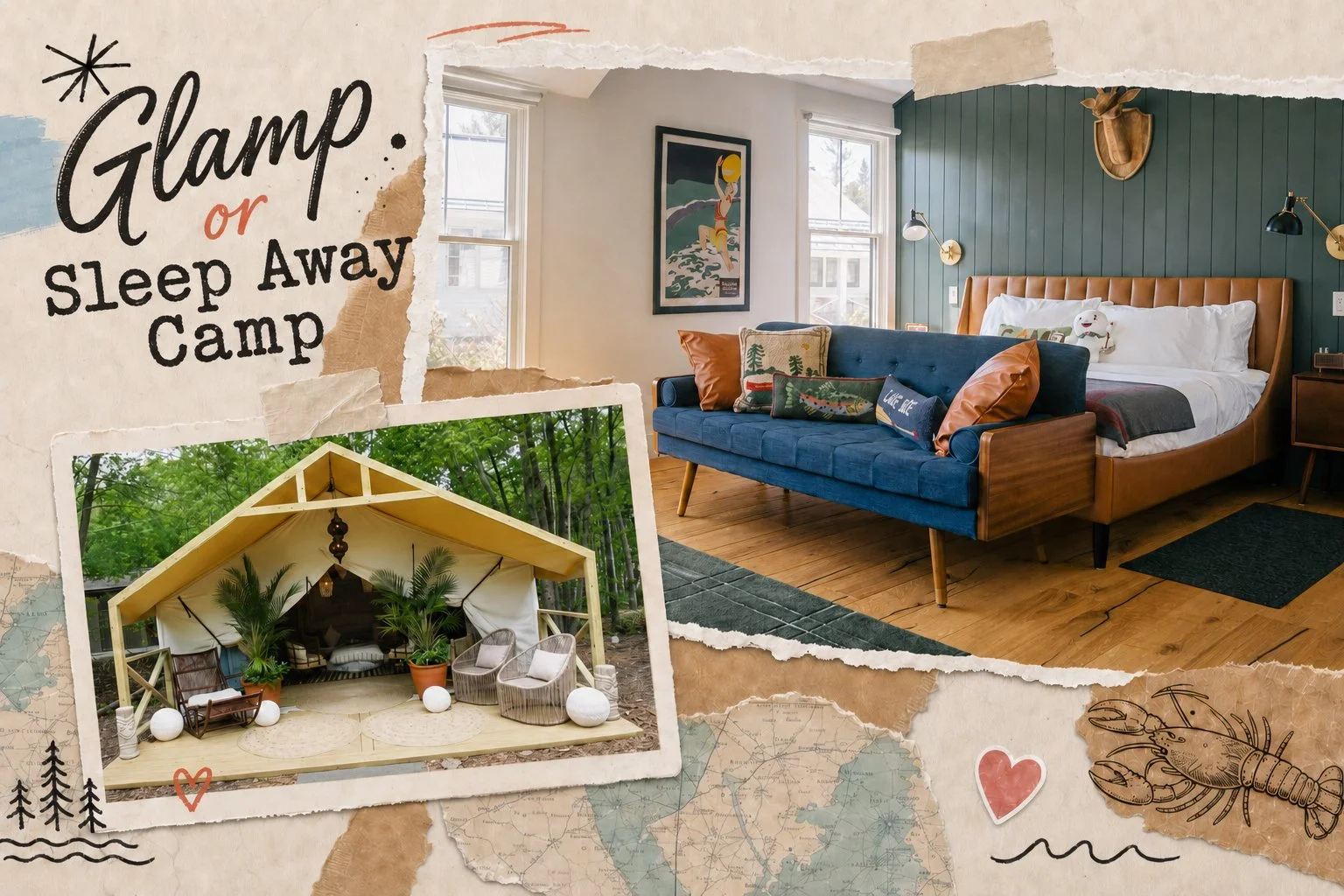
You've been scrolling Maine lodging options for the better part of an hour. There's a yurt on a pond in Durham, a chandelier-lit canvas tent in Kennebunkport, and then, tucked along the Midcoast between Camden and Belfast, something altogether different: a sleepaway camp-turned-boutique hotel called Camp DeForest, where the s'mores are real and the cocktails are cold. If you're weighing glamping in Maine against a camp-themed hotel, the question isn't just where to stay, it's whether a true outdoor glamping experience or a camp-inspired boutique property actually delivers more for your money, your comfort level, and your trip style.
Both options promise a taste of the outdoors without roughing it. But they deliver that promise in very different ways, and the wrong choice can mean a long drive to dinner, a shared bathhouse at midnight, or a beautiful tent you barely used because the weather turned. This guide breaks it all down plainly: the top Maine glamping options, what they actually offer (and don't), what you'll pay by season, and how Camp DeForest fits into the picture as a seriously compelling alternative for the right kind of traveler.
Glamping in Maine: What the Scene Actually Looks Like
Maine is a leading glamping destination in New England, with a high concentration of top-rated sites clustered around Acadia National Park and spreading across three distinct regions of the state. The variety on offer is broader than most travelers expect. You're not just choosing between a tent and a yurt, you're navigating an entire spectrum of outdoor lodging experiences, each with its own character, price point, and proximity to the things that make Maine worth the drive.
The glamping spectrum: yurts, domes, tents, and beyond
Canvas wall tents are among the most prominent luxury glamping offerings in Maine, anchored by two well-known names near Acadia: Terramor Outdoor Resort in Surry and Under Canvas Acadia, also near Surry. Both offer a hotel-adjacent experience with private bathrooms, electricity, and real beds, but you're still very much sleeping in a tent, and the experience lives and dies by the weather. Yurts, like those at Acadia Yurts in Surry, which include full kitchens and private bathrooms, are more self-contained, with a permanent-feeling structure that handles cold nights better than canvas. Maine Forest Yurts in Durham sits on Runaround Pond and offers a similarly water-centric experience; verify exact unit amenities directly with the property, as configurations vary. Eco-domes, like the Comfy Dome in Jefferson, lean into the stargazing and solitude angle with a more minimal setup. The structure type shapes your entire trip, so knowing what you actually want out of the stay matters before you start comparing prices.
Where Maine glamping is concentrated and what that means for your trip
Three main glamping corridors define the Maine market. The Acadia region, centered around Surry and Bar Harbor, has the highest density of options and the highest prices, but it puts you closest to the park, making glamping near Acadia the top choice for first-time visitors to the state. The South Coast corridor, anchored by Kennebunkport and Sanford, offers unique structures like Airstreams and Conestoga wagons at Sandy Pines, with beach access as the draw. Central Maine, which includes Durham, Bremen, and Jefferson, is quieter, more affordable, and more water-centric, with properties like Maine Forest Yurts on Runaround Pond and a floating camp on Pemaquid Pond in Bremen. Location reframes the trip entirely, not just the drive time. Glamping near Acadia and glamping on the Midcoast are genuinely different vacations.
Amenities Reality Check: What Maine Glamping Actually Delivers
Most glamping sites sell the dream beautifully. The photos are gorgeous, the copy is warm, and everything looks effortless. The details, however, are where decisions get made. Private bathrooms, kitchen access, pet policies, and heating availability vary significantly across properties, and a few of the most popular sites have surprises that don't always make it into the listing headline.
Private bathrooms, kitchens, and heat: who has what
Private bathrooms are available at top-tier properties, but not universally. Terramor's canvas tents include ensuite private baths, and Under Canvas Acadia's deluxe tents have private showers and flushing toilets. Acadia Yurts includes both full kitchens and private bathrooms in its units. Sandy Pines, for all its visual appeal, explicitly does not offer private bathrooms in its glamping rentals, you're walking to a shared bathhouse. Full kitchens are far more common in yurt rentals than in canvas tents, where a kitchenette with a mini-fridge and coffee maker is the typical offering. Heating is standard across nearly all Maine glamping structures. Hot tubs are the rarest amenity: Sandy Pines has four shared hot tubs, and one island property offers a wood-fired private version, but most glamping sites simply don't have them.
Pet-friendly glamping in Maine: what the policies actually say
Pet policies in Maine glamping are one of the most misread categories in the entire lodging search. Terramor allows dogs in most wall tents, runs a fenced dog park on the property, and provides a welcome "pup bag" with treats on arrival. Maine Forest Yurts permits dogs inside two of its yurt units. Huttopia Southern Maine and Comfy Dome in Jefferson also welcome pets. Sandy Pines is the notable exception: despite being a generally pet-friendly campground, pets are explicitly not permitted inside any of its glamping rentals, including the Airstreams and Conestoga wagons. Verify at the unit level, not just the resort level, a property can be dog-friendly overall and still ban pets from every premium accommodation on the grounds.
Glamping in Maine: Costs by Season
Maine glamping rates swing dramatically across the calendar, and understanding the timing is one of the most practical things you can do before you start browsing availability. The difference between a May booking and a July booking for a similar unit at the same property can easily run $150 to $200 per night.
Summer peak rates and how early to book
July and August are the most competitive window in Maine glamping. Standard nightly rates run between $250 and $350, and luxury tent resorts like Terramor push closer to $300 to $450 per night on summer weekends. Many properties require a two-night minimum on weekends, which inflates the total cost even when the per-night rate looks manageable on its own. Book summer glamping three to four months out. Popular sites near Acadia sell out faster than most travelers expect, and genuine last-minute openings are rare rather than a realistic planning strategy.
Spring and fall as the smarter booking windows
Spring, from May through early June, and fall, from September through October, both deliver the same Maine landscapes at a fraction of the summer price. Expect rates between $100 and $200 per night during these shoulder seasons, with some properties opening as low as $109 in May. Fall foliage adds a visual payoff that rivals summer in many ways, and October rates drop further toward the year's lowest point. For budget-conscious travelers who don't need a July beach crowd, fall is the clearest value window in the Maine glamping calendar, with rates, availability, and scenery all working in your favor at once.
Camp-Themed Boutique Hotels: A Different Kind of Elevated Stay
A camp-themed hotel fills gaps that traditional glamping consistently leaves open. Remote glamping is often short on conveniences that travelers don't realize they'll miss: on-site dining, communal gathering spaces, and the kind of effortless sociability that happens when a property is designed for it from the start. A purpose-built camp hotel delivers the outdoor atmosphere alongside the dining, drinks, and community that most remote glamping sites simply don't have on-property.
The sleepaway camp aesthetic, grown up
Camp DeForest in Lincolnville, Maine captures the nostalgic energy of a classic summer camp through renovated cabins and lodge rooms with cabin-chic style, while delivering the reliability of a modern boutique hotel. Guests aren't roughing it, and they're not in a generic coastal inn either. The atmosphere is deliberately warm and playful, and the Midcoast setting places the property minutes from Camden and Belfast, two of the most charming towns on the Maine coast. It's a lodging option with a genuine identity, which puts it in a different category from both standard motels and remote glamping cabins in Maine trying to build a vibe through decor alone.
On-site dining, craft cocktails, and the full camp experience
This is the biggest practical differentiator from traditional Maine glamping, and it's worth being direct about. Most glamping sites leave you to handle your own meals, which means a camp stove dinner or a drive to the nearest town after you've already settled in for the evening. Camp DeForest addresses this with on-site food and beverage options, including the Lantern Bar for craft cocktails, the Camp Café for morning coffee and light fare, and Happy Trails for camp-style eats, so you're not reaching for your car keys every time you're hungry. Add campfire s'mores and the communal energy that mirrors what people loved about childhood summers, and you have a full experience that a canvas tent on a pond can't replicate on its own.
Glamping or Camp Hotel: Which One Actually Wins for Your Trip
Neither format is universally superior. The right answer depends entirely on what you actually want to do and feel during your Maine stay, and being honest about that upfront saves you from a beautiful experience that turns out to be the wrong beautiful experience.
When traditional Maine glamping is the right call
Glamping in Maine wins for travelers who prioritize true solitude, night sky access, and the physical sensation of being embedded in nature. A couple chasing quiet mornings at Acadia will find that waterfront glamping in Maine, a yurt at a Runaround Pond property or a canvas tent at Terramor, delivers an immersive experience that a boutique hotel can't fully replicate. Glamping also works well for travelers who genuinely prefer cooking their own meals, are comfortable navigating shared bathhouse situations when necessary, and are prepared to book months ahead and pay peak-season prices for front-row nature access. If those conditions describe your ideal trip, the luxury glamping options in Maine are genuinely excellent.
When a camp-themed hotel beats the tent
For families who want the outdoor energy without managing meals and gear in a remote setting, a camp-themed hotel like Camp DeForest makes a compelling case. Couples who want craft cocktails and a cozy cabin without sacrificing comfort or convenience will find the trade-off well worth it. And anyone who's put off by weather-dependent canvas walls will appreciate the stability of a well-built cabin. If you've always wanted to relive the feeling of summer camp but with a real bed, on-site drinks, a café breakfast, and a Midcoast Maine backdrop that puts Camden and Belfast within easy reach, Camp DeForest offers that combination in a way that's genuinely hard to find elsewhere in the state.
Frequently Asked Questions About Glamping in Maine
Is glamping in Maine right for my trip?
It depends on your priorities. If solitude, immersive nature, and cooking your own meals appeal to you, Maine glamping delivers, especially near Acadia or on a Central Maine pond. If you'd rather have meals, drinks, and activities handled on-site without weather uncertainty, a camp-themed hotel like Camp DeForest is likely the stronger fit.
What's the best time of year for glamping in Maine?
Summer (July, August) offers the warmest weather and peak foliage access, but rates are highest and availability tightest. Fall is the best value window: lower prices, stunning foliage, and fewer crowds, particularly in September and October.
Are there glamping cabins in Maine with private bathrooms?
Yes, though not at every property. Terramor, Under Canvas Acadia, and Acadia Yurts all include private bathrooms. Sandy Pines does not, its glamping guests use a shared bathhouse. Always confirm at the unit level before booking.
How far in advance should I book glamping near Acadia?
Three to four months for summer stays is the standard recommendation. Peak-weekend availability at Terramor and Under Canvas Acadia can disappear well before that window closes.
Ready to Book Your Maine Stay?
Glamping in Maine and camp-themed hotels both offer genuinely special experiences, they just serve different travelers with different priorities. If your ideal Maine trip involves deep nature immersion, a remote pond view, and cooking breakfast over a camp stove, the glamping options covered here are worth your time. If you want the camp feeling with great food, cold drinks, and the freedom to explore Midcoast Maine without logistical stress, the answer comes into focus pretty quickly.
Camp DeForest is where comfort and nostalgia meet in a format that's hard to replicate elsewhere. Renovated cabins, craft cocktails at the Lantern Bar, campfire s'mores, and a location between Camden and Belfast, book early, because the best dates go fast. Visit Camp DeForest's booking page to check availability and secure your Midcoast Maine stay.