
Maine Fall Foliage Guide: When, Where & How to See the Best Colors
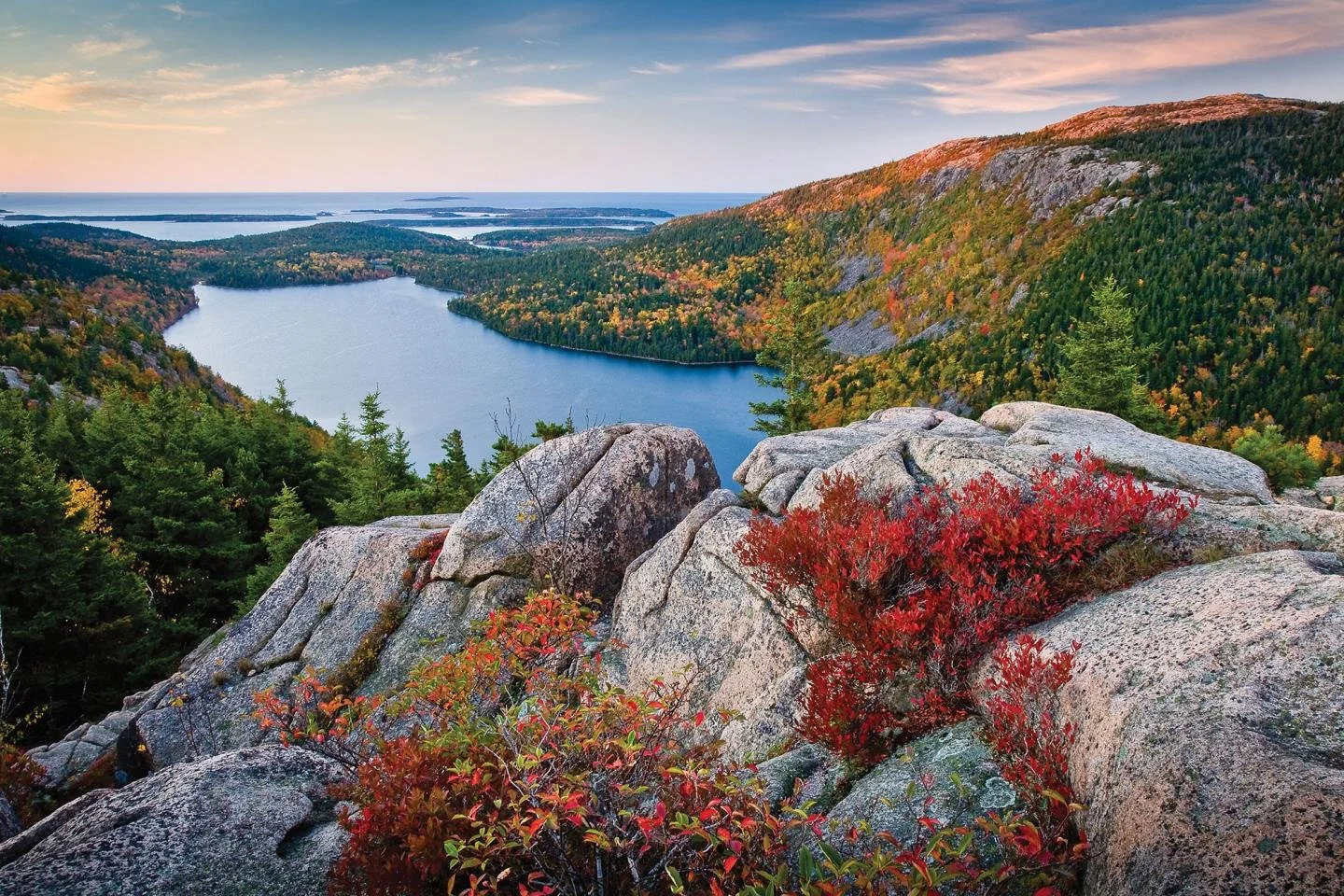
While summer is still in full flight, fall is coming soon! Every October, our guests sit on the porch at Camp DeForest in Lincolnville and watch the trees above Penobscot Bay do something remarkable. The maples go first, trading green for amber and deep crimson, and then the birches catch the light with that clean, impossible gold. New England draws heavy seasonal foliage traffic every autumn, but Maine is where leaf peeping has built its deepest reputation, and the people who plan one level deeper than "go in October" are the ones who see the real show.
By the end of this guide, you'll know exactly when to go, which region to target, which roads to drive, and how to track color in real time. The most important thing to understand from the start: Maine's foliage season doesn't happen in one big wave. Color moves north to south and high elevation to low, which means the season spans nearly six weeks across the state. Getting that timing right is the difference between catching peak color and driving three hours to look at mostly green trees.
Fall foliage Maine: a week-by-week regional timeline
The single most useful concept for planning a fall foliage Maine trip is that color travels like a slow tide moving southward. Northern forests and high-elevation zones turn first, and the coast turns last. That progression creates a window where a traveler can actually follow the color if they're strategic about it. It also means that Midcoast and southern Maine are easier to plan around because the peak falls later, when crowds thin and booking pressure eases slightly.
Northern Maine and the western mountains turn first
The Katahdin region and western mountain zones typically see their best color in the last week of September through the first week of October, roughly September 24 to October 6, based on Maine Forest Servicehistorical records covering 2020 to 2024. Towns like Rangeley, Bethel, and Fort Kent serve as bellwether indicators: when those communities hit peak, the color front is moving south fast. Higher elevations cool sooner than lower terrain, accelerating the color change as temperatures drop and daylight shortens, which is why mountaintop forests turn a full week or more ahead of the valleys below.
Midcoast and coastal Maine: peak color in mid-October
For Midcoast Maine, including Lincolnville and Camden, the historical peak window runs from approximately October 8 to October 16, with individual years ranging from as early as October 7 (2020) to as late as October 25 (2023). The Zone 1 five-year average puts the most reliable planning window at October 10 through 16. The coastal moderating effect, where the ocean holds warmth longer, pushes the peak later than inland areas at the same latitude. That actually works in your favor: Columbus Day weekend typically aligns with the Midcoast peak, the weather tends to be cool and crisp, and the color shows up brilliantly against harbor backdrops that inland forests simply can't match.
Southern Maine holds color into late October
The Portland-to-Kittery corridor typically peaks between mid and late October, making it the final chapter of Maine's foliage season. If your schedule only allows a late-October trip, the southern coast is your best bet. It won't have the same fiery intensity as a northern forest at its height, but the combination of ocean light, classic New England architecture, and lingering color across Cape Elizabeth, the Eastern Promenade in Portland, and the Kennebunks makes it well worth the drive.
Best places to see fall foliage in Maine
Maine's foliage landscape is varied, and the right region depends entirely on what kind of experience you're after. Remote wilderness with zero crowds, coastal charm with harbor reflections, western mountain drama, each region delivers something distinct. The mistake most first-timers make is treating Maine as one destination when it's really more like a half-dozen completely different ones stacked on top of each other, each with its own peak window and personality.
Katahdin region and the north woods
Millinocket, Patten, and Baxter State Park offer some of the most dramatic, uncrowded peak color in Maine, typically arriving in late September. The scale here is hard to overstate: the Katahdin massif rising above a sea of turning hardwoods is a visual that doesn't exist anywhere else in New England. The Fish River Scenic Byway (Route 11) adds moose sightings and eagle habitat to the drive. This region is built for the traveler who prioritizes wilderness over convenience and doesn't mind a longer drive from southern New England.
Western mountains: Rangeley, Bethel, and Grafton Notch
The western mountain corridor delivers some of the most visually intense foliage in the state. The Height of Land overlook on Route 17, perched above Mooselookmeguntic Lake, is a non-negotiable stop. Arrive at sunrise and you'll have the light hitting the lake and surrounding peaks exactly right. Sunday River Fall Fest (October 10 to 11, 2026) adds scenic chondola rides to the experience, lifting you above the treeline to look down into an ocean of red and gold without hiking a single mile.
Midcoast Maine: harbor towns, hillsides, and camp country
Midcoast gets the most detailed treatment here because it's where I spend my falls, and because it earns the attention. Lincolnville, Camden, and Belfast offer a genuinely accessible range of foliage experiences: hillside color framing harbor views, the scenic Route 52 inland loop past Megunticook Lake, and a small-town warmth that the more tourist-heavy destinations can't replicate. At Camp DeForest, our property sits right in the middle of this corridor. Guests use it as a base for morning drives on Route 52, afternoon walks in Camden Hills State Park, and evenings at the Lantern Bar watching the last light fade off the trees. The whole region is about 3.5 to 4 hours from Boston depending on traffic, making it one of the most accessible fall foliage destinations in New England.
Mount Battie in Camden Hills State Park, just 3.5 miles from our door, offers a free hiking trail to a summit with 360-degree views of Penobscot Bay and the surrounding canopy. At peak, that vista is pure fire: red maples, sugar maples burning orange and yellow, and yellow birch going gold against the dark water below. It costs nothing and takes about an hour round trip.
Top scenic drives for leaf peeping in Maine
Knowing the region is half the battle. Knowing which road to drive is what turns a foliage trip into a memory. These routes cover the best of Maine's fall color from the western mountains to the coast.
Rangeley Lakes National Scenic Byway (Route 17/20)
This is Maine's most celebrated foliage drive, and the Height of Land overlook above Mooselookmeguntic Lake is the reason. The panoramic view of the lake and surrounding peaks, framed by turning hardwoods, is one of the great fall color viewpoints in New England. The best week to drive it is early October, and the best time of day is sunrise, when the light hits the water directly and the air is still enough to get a clean reflection shot. Plan the full Rangeley Lakes Byway (Routes 17 and 20) as a half-day loop from Bethel or Rangeley village.
Acadia's Park Loop Road and the Bold Coast Byway
The 27-mile Park Loop Road on Mount Desert Island delivers something no inland drive can: fall color running directly to the edge of the Atlantic. The ocean backdrop transforms the standard foliage palette into something more dramatic, and the carriage roads inside the park add a quieter, car-free option for hikers and cyclists. For a longer coastal drive, the Bold Coast National Scenic Byway on Route 1 through Downeast Maine extends the ocean-meets-foliage experience with cliffside views and far fewer crowds than Acadia. Both peak around mid-October.
Midcoast's Route 1 and the Route 52 inland loop
For travelers based in Midcoast, including anyone staying at Camp DeForest, this is the daily drive that never gets old. Route 1 from Bath through Rockland, Camden, Lincolnville, and on to Belfast gives you harbor towns, antique shops, and rolling hillsides in one connected corridor. The detour inland on Route 52 past Megunticook Lake is where the drive changes from scenic to spectacular: the lake surface picks up the color of the surrounding hills, and on a clear October morning, you're looking at one of the best leaf-peeping views in the state without leaving the road. The whole loop from Camp DeForest runs roughly 90 minutes at a relaxed pace, depending on stops.
How to track Maine fall foliage progress in 2026
Even perfect timing knowledge gets humbled by weather variability. A warm September can delay peak by a week; an early frost can push it forward. The Maine Forest Service's official tracking tools exist precisely because no historical calendar can tell you what the trees are doing right now. For the most current Maine foliage forecast and fall color updates in Maine, MaineFoliage.com is the authoritative source.
The Maine Forest Service weekly reports
The 2026 reporting season launches September 16 on MaineFoliage.com, with new reports published every Wednesday through mid-October. These aren't satellite estimates or algorithm-generated color percentages. Field rangers assess actual color change and leaf drop on the ground, region by region, and report what they see. That ground-truth approach is more reliable than any automated system, especially in a year with unusual weather patterns. Subscribe to the email list at MaineFoliage.com so each Wednesday report lands in your inbox automatically. You can also reference the Maine Forest Service directly for forestry data and historical foliage records.
Using the Maine fall color map and "When & Where to Visit" planning tool
Each fall season includes a Maine fall color map and planning tool on the MaineFoliage.com "When & Where to Visit" page that uses three years of historical daily foliage data to help you identify peak windows by zone. It's a practical resource for narrowing down your travel dates before the season opens. One important note: the map does not include 2025 data updates, so pair the historical tool with the current-season Wednesday reports once September 16 arrives for the most accurate Maine foliage forecast picture.
Fall festivals as a timing signal
Major festivals are scheduled around historical peak windows and serve as a useful proxy calendar. The Boothbay Harbour Foliage Festival (October 10 to 11) and Sunday River Fall Fest (October 10 to 11, 2026) both land within the western and Midcoast peak windows. The Fryeburg Fair (October 4 to 11) anchors the western mountain timing. If a festival that's been running for decades lands on a specific weekend, it's because the organizers know from experience that the color is reliably good then.
Planning your Maine foliage trip: lodging, timing, and what to pack
Inspiration is useless without a booked room. Midcoast and western Maine accommodations often fill months in advance during peak foliage, and Columbus Day weekend is the single most competitive booking window in the Maine lodging calendar. This section is about turning a great plan into a confirmed trip.
Book early and choose your base wisely
For mid-October stays in Camden and Lincolnville, book at least three to four months in advance. For Columbus Day weekend specifically, the realistic advice is to lock in your reservation by May or June, properties at that level of demand routinely fill by midsummer. Choosing a single base and doing day drives from it saves time, cuts the friction of packing and unpacking, and lets the trip breathe rather than feeling like a logistics exercise. Midcoast works well as a base because it sits central to northern color (drive north on Route 1 toward Belfast and beyond) and southern coastal towns (drop south to Rockland, Thomaston, or Bath).
What to pack for October in Maine
October mornings in Midcoast Maine regularly drop into the 30s and low 40s, so layering isn't optional. Start with a moisture-wicking base layer, add a mid-layer fleece, and bring a waterproof shell for the soaking rain that sweeps through every week or two. Waterproof footwear matters if you're hiking Mount Battie or any trail after rain. For photography, bring a polarizing filter. It cuts glare off water surfaces and makes the reds and oranges pop in a way that post-processing can't fully replicate.
Why a camp-style stay makes fall foliage feel different
There's something the hotel-window experience can't give you that a cabin porch can. At Camp DeForest, watching the trees turn from the porch of your cottage is a different thing entirely from watching them through a parking lot. The scale feels right, the air smells like woodsmoke and salt, and the pace slows down in a way that's hard to manufacture in a conventional hotel setting. Evenings here mean craft beers at the Lantern Bar as dusk turns the trees gold, s'mores over the fire as the temperature drops, and waking up to Camp Café coffee before a morning drive on Route 52. Camden is about four miles south; Belfast is roughly twelve miles north. The foliage drive starts at the door. That's not a marketing pitch, it's just the honest answer to where to stay in Midcoast Maine for fall.
Make your foliage season count
Fall foliage in Maine is one of the most layered, region-rich seasonal experiences in all of New England, and the travelers who get the most out of it are the ones who plan one level deeper than "go in October." The north-to-south timing ladder gives you a six-week window to work with. The MaineFoliage.com Wednesday reports deliver real-time fall color updates for Maine once September 16 arrives. And Midcoast Maine gives you a central, drivable base with some of the most striking harbor-and-hillside color in the state.
Check the Maine foliage forecast calendar, lock in your peak window, and book before the crowds do. When those red maples light up above Penobscot Bay, you'll want a porch to watch it from. We've got one waiting for you at Camp DeForest.