
Ice Fishing in Midcoast Maine: A Complete Guide
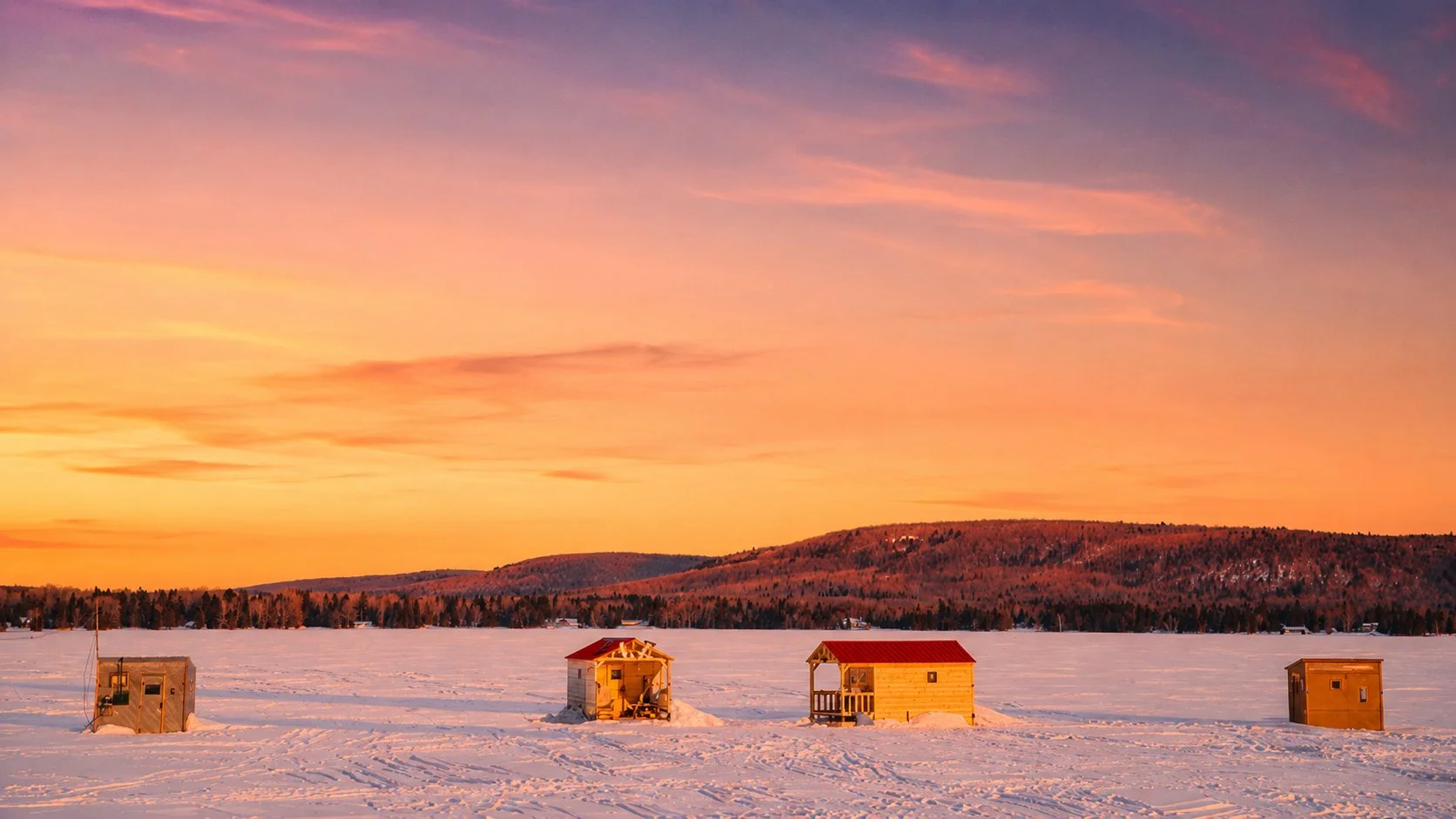
Midcoast Maine ice fishing delivers quiet, physical, and genuinely rewarding winter days. The auger bites through with a hollow crack, and suddenly you're staring down a perfect circle of black water surrounded by twelve inches of January ice. Somewhere below, in a cold Waldo County pond that most people drive past without a second look, brook trout are holding tight near the inlet end, waiting. That's what ice fishing in Midcoast Maine offers, and it's more rewarding than most people who've never tried it could guess.
Knox, Waldo, and Lincoln counties hold dozens of accessible ponds and lakes within easy reach of Camden, Belfast, and Lincolnville, and many of them see far less winter pressure than they do in July. This guide covers everything you need to plan a safe and productive midcoast Maine ice fishing trip: the right water, the licenses that keep you legal, ice-safety minimums that keep you alive, species tactics that actually work, and rental resources if you're starting from scratch. And because fishing in the cold is only half the story, we'll end with the obvious question of where you're going to warm up afterward.
Midcoast Maine Ice Fishing: Best Ponds and Lakes Near Camden, Belfast, and Lincolnville
The good news for Midcoast anglers is that productive ice water is close. You don't need to drive to Moosehead to find fish. The ponds below are within a reasonable drive of the three main anchor towns, and each one has a distinct character worth knowing before you load the sled.
Waldo County Waters Worth the Early Alarm
Levenseller Pond in Searsmont sits just inland from Belfast and targets well for yellow perch, chain pickerel, and occasional trout. It's a manageable size for anglers drilling exploratory holes. Halfmoon Pond in Prospect is another Waldo County option with similar species expectations. Both ponds are generally accessible, though you'll want to verify current access points using town maps or the IFW public access database before you go, especially after a warm snap. The relative shallowness of both ponds suggests ice can form earlier in the season, but conditions vary year to year, so check local reports and IFW guidance before walking out.
Knox and Lincoln County Spots for Trout Chasers
Tolman Pond in Rockport is a coldwater, managed pond that receives brook trout stocking. Access is hand-carry only, meaning you walk your gear in, which keeps the crowds thin. Ross Pond in Bristol and Pinkham Pond in Alna round out the Lincoln County options for anglers willing to push a bit further west. These are quieter, colder waters where a slow jig near bottom in the early hours will consistently outperform anything flashy or rushed.
How to Choose the Right Pond for Your Group
If you're bringing kids or first-timers, aim for smaller Waldo County ponds known for perch. Yellow perch school tight, bite readily, and produce enough action to keep impatient beginners engaged. If trout are the goal, the stocked waters in Knox and Lincoln counties reward anglers who are willing to drill more holes, move around, and fish with patience. Match the water body to your experience level and you'll have a better day regardless of the species.
Maine Fishing Licenses and Seasonal Rules Before You Drill a Hole
Getting checked on the ice without a license is an avoidable problem. Maine IFW enforces inland fishing regulations year-round, and ice fishing is treated exactly like open-water fishing for licensing purposes. Get this right before you leave the truck.
How to Get Your License and When You Don't Need One
Maine fishing licenses are available through the IFW online portal at maine.gov, and a standard resident or non-resident license covers ice fishing statewide. If you want to fish for free, mark February 14 and 15, 2026 on the calendar: those are Maine's confirmed free fishing days for the winter season, and no license is required on those dates. Outside of free fishing days, buy your license before you go. The digital version on your phone is valid.
South Zone Rules and What They Mean for Midcoast Ponds
Knox and Waldo counties fall within Maine's South Zone, a designation confirmed by the IFW zone map, which means their ponds are open to fishing year-round, including ice fishing from January through December. That's a meaningful distinction from North Zone waters, which close to all fishing from October 1 through March 31 unless a special regulation applies.
For South Zone brook trout, the current limit is 2 fish per day with a 6-inch minimum length. Brown trout carry a 2-fish limit with a 14-inch minimum. Yellow perch have no statewide bag limit or size minimum under general law, though special-regulation waters can change that. Maine also allows each angler up to five lines while ice fishing, and any shelter left on the ice must display the owner's name and address on the outside in 2-inch letters. Always verify the specific rules for your target pond through the IFW Fishing Laws summary before the trip.
Midcoast Maine Ice Fishing Safety: What Every Angler Needs to Know
This section isn't optional reading. Ice safety is the difference between a great story and a tragedy, and the rules below apply every time you step off the bank, regardless of how cold it's been or how many trucks you see parked at the launch.
Minimum Thickness by Activity Type
Four inches of new, clear ice is the widely accepted minimum for walking on foot. Snowmobiles and ATVs require 5 to 7 inches at minimum. Enclosed shelters and any vehicle add significantly more load and demand much greater thickness, well beyond what most Midcoast ponds can reliably provide in a typical season. The key word in all of this is "clear": white or snow ice is roughly half as strong as clear blue-green ice. A pond that looks like it has six inches of cover may only offer the structural equivalent of three if snow ice dominates.
How to Read Conditions Before You Commit
Drill test holes at the bank before walking further out. Check for slush layers between the snow and ice surface, listen for cracking or booming sounds that indicate stress, and never walk near inlets, outlets, or any area with visible current beneath the surface. Ice conditions can vary dramatically from one end of a pond to the other, even within the same county on the same day. When conditions are uncertain, the right call is to stay off.
What to Carry on the Ice Every Time You Go
Ice picks worn around your neck are non-negotiable, IFW and ice-safety organizations consistently list them as essential rescue gear. If you break through, they are what pull you back out. Add a throw rope for fishing with a partner, a dry change of clothes kept in the vehicle, and a fully charged phone. Treat them as core gear, as important as the rod and reel. Don't walk out without them.
The Fish You'll Find and the Tactics That Actually Work
Midcoast ponds in winter hold a reliable mix of species, and each one responds to a different approach. Match your presentation to the fish and the conditions, and you'll find plenty of action even on the quietest days.
Brook Trout and Brown Trout: Slowing Everything Down
Cold water slows trout metabolism significantly, which means your presentation needs to follow suit. Small jigging spoons tipped with a wax worm or mealworm, worked slowly near bottom with long pauses between movements, will consistently outperform any aggressive retrieve. Target the inlet ends of stocked ponds where oxygenated water draws fish to feed. Many experienced ice anglers find early morning and late afternoon the most productive windows for trout, with activity often tapering off in the middle of the day as light levels increase.
Yellow Perch and Chain Pickerel: the Willing Biters
Perch are the most beginner-friendly fish on Midcoast ice. They school tight, often in modest depths around any available structure, and once you locate them, the action can be steady for hours. Small teardrops or compact jigging spoons tipped with a piece of worm are reliable producer choices. Chain pickerel are native to many Midcoast ponds and frequently appear when anglers are targeting perch in weedy, shallow coves. They hit hard on small shiners and spoons, and while they're not always the target species, landing one is never a disappointment.
A Simple Two-Rod Setup for the Ice
Run one deadstick tip-up rigged with a live shiner under a bobber for larger predators, set near weed edges or structure. Work a second jigging rod by hand for trout and perch, using 4- to 6-pound monofilament with a size 8 to 10 hook. That combination covers the full range of species you'll encounter while ice fishing in Midcoast Maine without requiring a full tackle overhaul. Contact Maine Sport Outfitters in Camden to confirm current gear availability before your trip.
Gear Rentals and Guided Trips in the Midcoast Region
Not everyone owns an auger or a fish shack, and there's no reason to buy gear for a trip you haven't taken yet. Rental and guided options exist, though Midcoast Maine has fewer dedicated ice-fishing guide services than the Moosehead region in general, which makes advance planning important.
Local Outfitters and Guide Services Worth Booking
Six Fins Guides offers ice-shack rentals by the day and guided ice-fishing trips that include gear and local knowledge of productive water. A fully guided outing is worth the investment for first-timers who want to skip the learning curve and put fish on the ice from day one. Maine Sport Outfitters in Camden and Flood Tide Outfitters, which serves the Camden and Lincolnville area, are also worth contacting for current winter offerings and gear sourcing. It's also worth checking with local ice-fishing clubs and IFW regional contacts in Knox and Waldo counties, club members are often the best source of current ice conditions and lesser-known productive water. Book early: winter guide availability in Midcoast Maine fills faster than people expect.
What to Bring If You're Going Fully on Your Own
You'll need a hand or power auger, a rod and reel combo rated for ice fishing (shorter, more sensitive rods than open-water gear), terminal tackle matched to your target species, and some form of wind protection. A sled makes hauling everything from the truck to your spot far less painful than carrying it by hand. Maine Sport Outfitters in Camden is a confirmed local source for ice-fishing gear; call ahead to verify stock and current winter inventory before you make the drive.
Making Camp DeForest Your Base Camp for a Midcoast Ice-Fishing Trip
Six hours on a frozen pond in February earns you something warm at the end of it. Where you stay matters more in winter than most people admit, and that's the part worth thinking through before you book the trip.
A Warm Room Minutes from the Best Winter Fishing in the Region
Camp DeForest in Lincolnville is positioned between Camden and Belfast and within easy reach of every pond covered in this guide, making it a natural base camp for a midcoast Maine ice fishing trip. The cabin-style rooms are built for comfort and warmth, which lands differently after a morning of drilling holes in the cold than it does on a July weekend. The sleepaway camp aesthetic isn't just a design choice. It fits the rhythm of a fishing trip in a way that a generic hotel simply doesn't. You wake up, gear up, and head out. You come back, peel off the layers, and decompress.
The Lantern Bar: the Best Part of a Cold Day on the Ice
The Lantern Bar at Camp DeForest is the earned reward after a long morning on the water. Craft beer, a warm room, and the particular satisfaction of recounting exactly where you drilled and what came up through the hole: that's the full experience. The fishing is the adventure; Camp DeForest is where you recover, warm up, and start planning the next morning's session. It's the kind of setup that turns a day trip into a proper winter getaway.
Plan Now: The Season Is Short
Ice fishing in Midcoast Maine rewards anglers who prepare and respect what they're dealing with. The region holds more accessible, fishable winter water than most people realize, spread across three counties and a dozen quiet ponds that see a fraction of the summer crowds. Come ready with the right spots scouted, the ice respected, and your gear and licenses sorted before you leave home. Interested in dipping your toe in before go all out? Checkout an ice fishing derby this winter!
On Knox and Waldo County ponds, ice typically forms in late December and can persist into mid-to-late April in a normal winter, though the most reliable fishing window is shorter than that, check current-year local ice-out records and IFW guidance each season. The window is short, the ponds are uncrowded, and the Lantern Bar will be waiting when you're done. Check availability for a winter stay at Camp DeForest and build the trip before the ice goes out for the year.